
Short answer
Antalya hospital solar covers part of a healthcare facility's 24/7 electricity consumption, which rises with air conditioning in summer, using a solar energy system on the roof or car park. A solar plant does not replace the UPS and generator infrastructure that supplies critical loads; it is designed to work alongside it. A hybrid battery set-up can be considered for selected loads, and the connection process follows current regulations.
Key takeaways
- The continuous consumption of healthcare facilities means most daytime solar output is used on site.
- In Antalya, the summer rise in air-conditioning load coincides with the months of high solar output.
- On-grid inverters stop during a grid outage; a solar plant alone does not provide backup power.
- For operation alongside a generator, a disconnection or output-limiting scheme must be defined in the electrical design.
- A hybrid battery system can be considered as an extra layer for preselected loads rather than critical medical circuits.
- Installation and maintenance must be planned so as not to disrupt the facility's 24/7 operation.
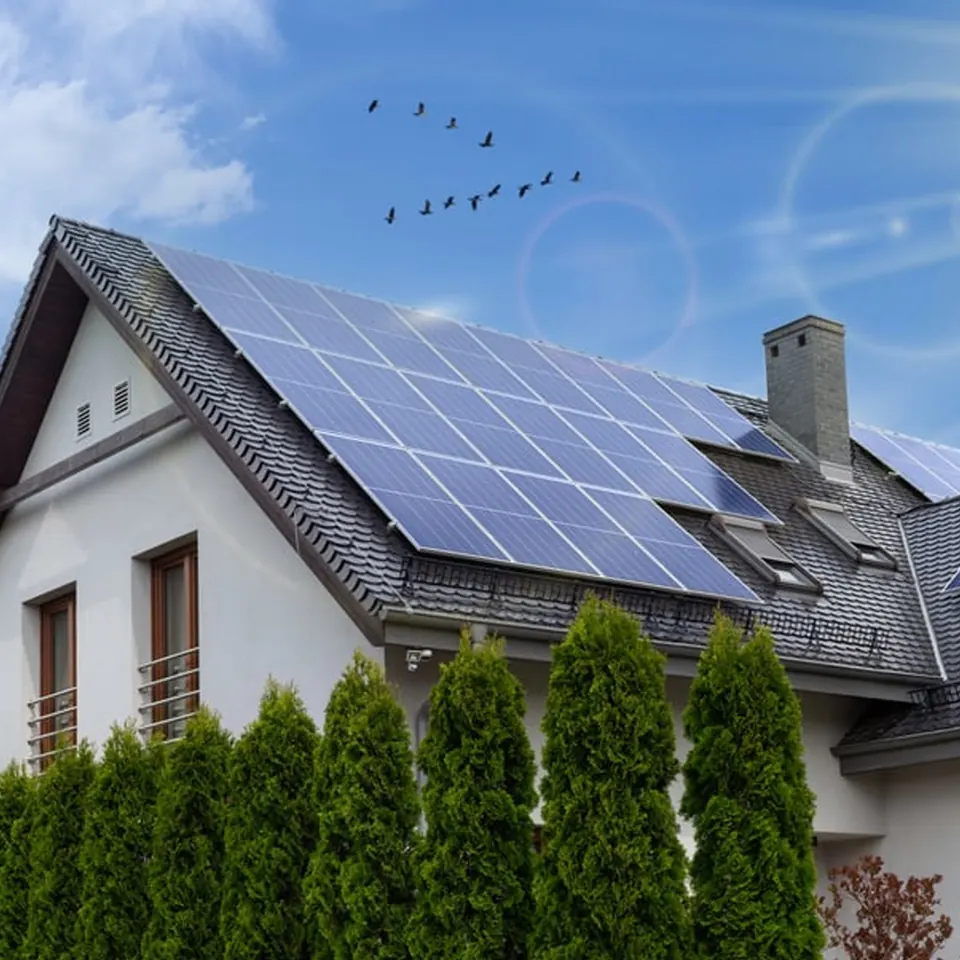
Hospitals, clinics, medical centres and dental practices are buildings that run day and night, whose air conditioning never stops and whose tolerance for power outages is very low. The Antalya hospital solar approach aims to cover part of the high, continuous electricity consumption of these facilities with a solar power plant (GES) installed on the roof or over the car park. In healthcare buildings, however, solar energy must be designed as a layer that works alongside the existing uninterruptible power infrastructure, not one that replaces it. In this article we explain how to achieve that compatibility.
What is Antalya hospital solar, and why does it attract interest?
A hospital solar system lets a healthcare facility generate part of the electricity it draws from the grid on its own roof or car park. The main reason for healthcare facilities' interest in solar energy is that their consumption is both high and continuous. Energy generated during the day can largely be consumed immediately by loads that are already running in the building.
At the same time, healthcare buildings carry a sensitivity that ordinary commercial buildings do not. Critical circuits such as intensive care, operating theatres and medical equipment supplies are designed according to their own standards, manufacturer requirements and the facility's approved electrical design. The solar system does not change the design of these circuits; it is integrated in a way that cannot harm them. The information in this article is a general engineering framework and makes no claims regarding medical devices or healthcare regulations.
The 24/7 load profile of healthcare facilities
A hospital's consumption never drops below a certain base level, even at night. Patient rooms, corridor lighting, IT systems, cooling and ventilation run continuously. During the day, loads such as outpatient clinics, imaging units, laboratories, sterilisation, kitchens and laundries come on and consumption rises.
| Load group | Operating time | Relationship to solar output |
|---|---|---|
| Air conditioning and ventilation | 24/7, heavy during summer days | Daytime peak load coincides with output |
| Lighting | All day, partly at night as well | The daytime share can be covered |
| IT and communications | 24/7 | Part of the base load |
| Outpatient clinics, laboratories, imaging | Mainly working hours | High match |
| Sterilisation, kitchen, laundry | Scheduled shifts | Depends on scheduling |
| Critical medical loads | 24/7 | Supplied by their own UPS and generator infrastructure |
This profile means solar energy is advantageous in terms of self-consumption: most of the output is used inside the facility. To find the right system size, at least twelve months of consumption data and, if possible, an hourly or fifteen-minute load profile should be analysed. This analysis helps choose an installed capacity that does not exceed the facility's daytime base load.
It also pays to consider the solar investment together with energy efficiency measures. Upgrading lighting with efficient fittings, reviewing the operating settings of chillers, or shifting schedulable loads such as sterilisation and laundry to daytime hours all affect the share of generated energy used within the facility. Since these steps can also change the system size, they should be assessed together with the facility's technical management during the consumption analysis. This avoids installing a system that is either oversized or falls short of actual needs.
Air-conditioning load and solar output in Antalya
Antalya's long, hot summers significantly increase the air-conditioning load in healthcare facilities. Because a constant temperature and air quality must be maintained inside, cooling systems work hard all summer. This is also the period of highest solar output. According to PVGIS 5.3, the theoretical output of a 1 kWp system in central Antalya is about 168 kWh in July and about 167 kWh in August; the annual total is about 1,656 kWh/kWp.
This overlap makes the potential of solar energy in Antalya meaningful for healthcare facilities. Output falls in the winter months (about 99 kWh/kWp in December and January), but because daytime outpatient and service loads continue during this period, the energy generated is still used inside the facility. In a city where health tourism has grown, patient numbers in the summer season can be added to this picture.

Critical loads: working alongside UPS and generators
The most important technical issue in healthcare facilities is how the solar system will work together with the existing uninterruptible power infrastructure. The key points to know are:
- On-grid inverters stop during an outage: Grid-connected inverters shut down output for safety reasons when the grid fails. In other words, a conventional on-grid system does not provide backup power on its own.
- Interaction with the generator: When the generator starts during an outage, the inverters may, without suitable precautions, treat the generator as the grid and try to keep producing. At low load this can create a risk of reverse power flow into the generator. For this reason, the electrical design must define either that the solar system is disconnected while the generator runs, or a control scheme that limits output according to load.
- UPS systems remain separate: The UPS units supplying critical circuits operate according to their own design criteria. The solar system is connected on the general distribution side upstream of the UPS inputs; the structure of the critical circuits is not changed.
- Selectivity and protection coordination: The compatibility of the solar connection with the facility's protection scheme, along with fuse and circuit breaker selection, must be checked by an electrical engineer.
In short, on Antalya hospital solar projects the solar system is a layer aimed at reducing energy costs and the energy drawn from the grid; the safety of critical loads remains the responsibility of the existing UPS and generator infrastructure. We discuss the general logic of combining a generator with solar energy in our article on solar energy that keeps running during power cuts.
A hybrid set-up with batteries: for which loads does it make sense?
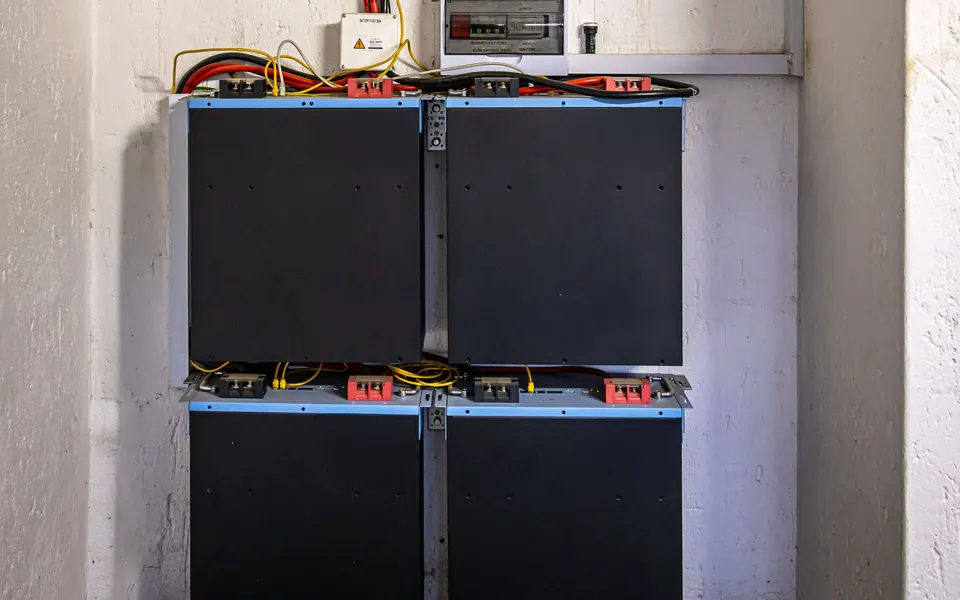
A system with a hybrid inverter and lithium batteries can continue to supply a selected group of loads when the grid fails. In healthcare facilities, this set-up can be considered as an additional energy layer not for critical medical circuits but for predefined loads such as patient registration and IT units, certain lighting groups or administrative departments. Which loads fall within this scope should be decided together with the facility's electrical design and the engineers responsible for it.
Battery capacity is calculated from the power of the loads to be supplied and how long they need to be supplied. Lithium batteries carry a warranty of 5 years / 8,000 cycles. Ventilation, fire safety and access for the battery room or cabinet are planned separately. For the general framework of storage options, see our article on energy storage for Antalya solar power plants, and for the hybrid concept, our article on hybrid solar energy systems.
Healthcare buildings as an Antalya solar power plant: roof and car park areas
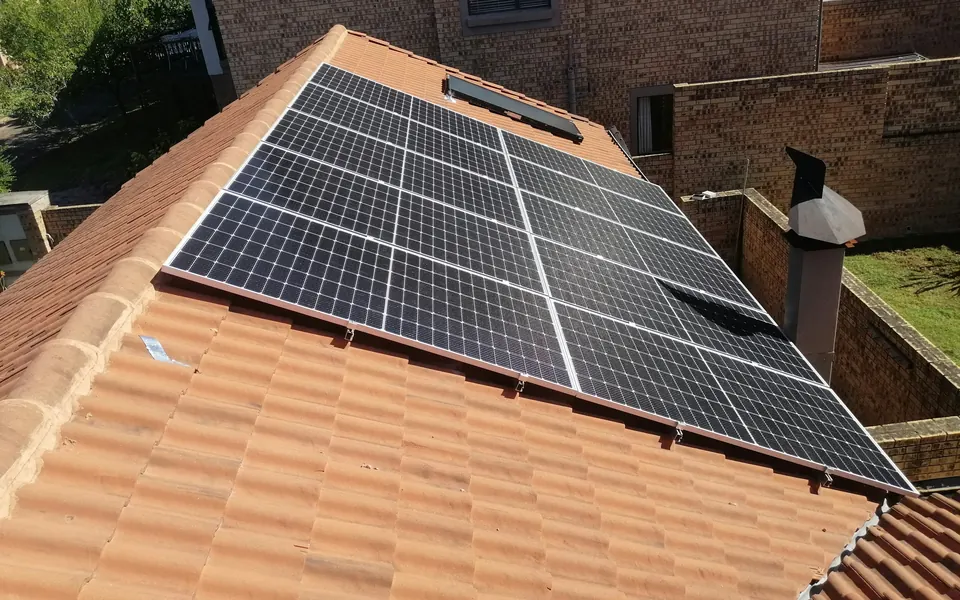
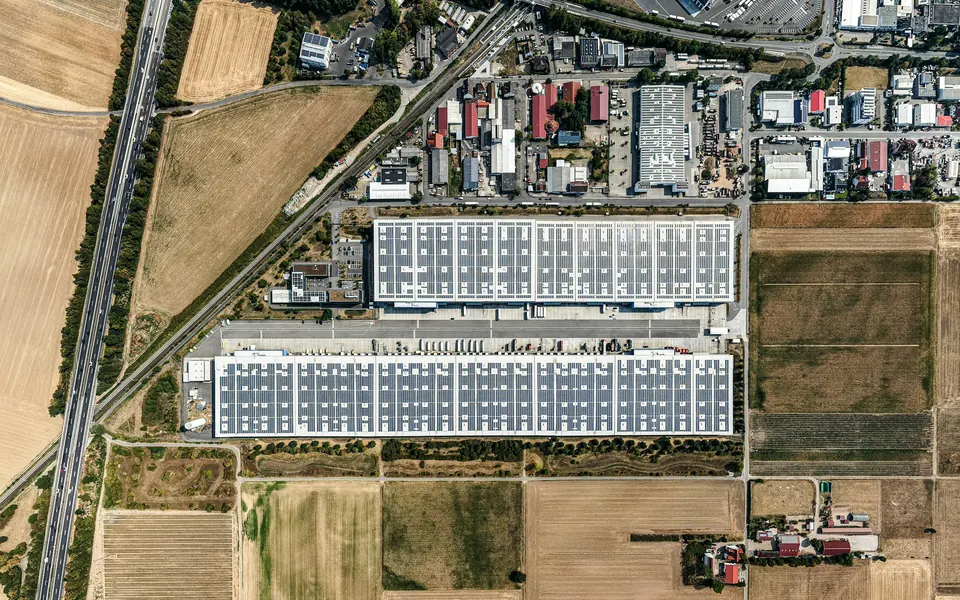
Hospital roofs are usually flat, but they carry chillers, air-handling units, ventilation stacks and other technical equipment. This equipment both casts shade and needs maintenance access. The panel layout must not block the service areas of existing equipment. In some hospitals, special uses such as a helipad also feed into the layout plan.
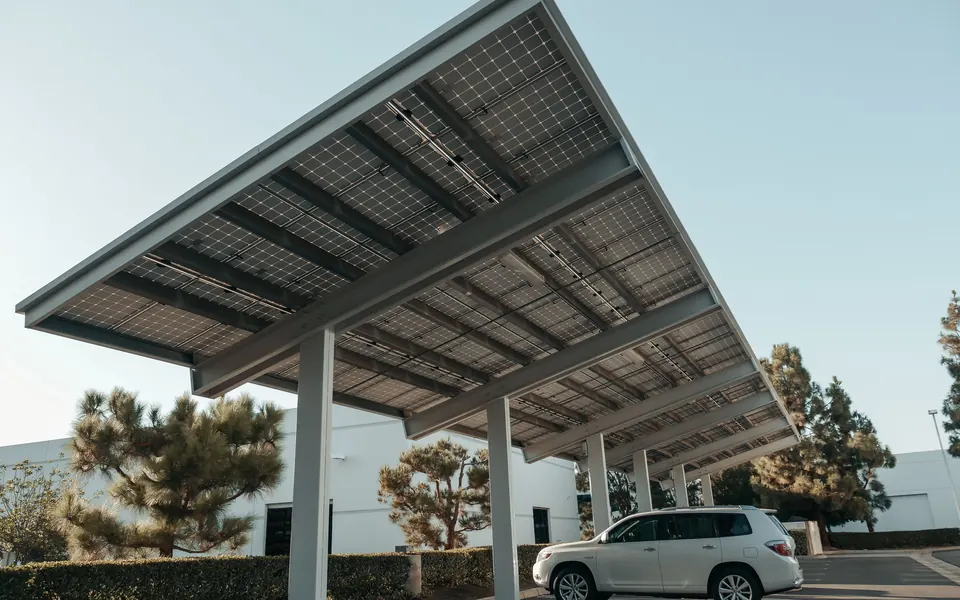
Another area that stands out when healthcare facilities are planned as an Antalya solar power plant is the car park. Carports built over staff and visitor car parks shade vehicles and provide generating area without adding load to the roof. In carport design, the ground conditions, wind loads and keeping ambulance and emergency vehicle routes clear must be given particular attention. Roof structure and waterproofing are assessed before installation in every case. During the site survey, Solar Nexo maps the roof equipment, service areas and car park traffic on site and reviews layout options with the facility management.
Clinic, medical centre and dental practice scale
In smaller healthcare businesses the approach is a little different. Medical centres and dental practices mostly operate intensively during working hours; compressors, sterilisers, air conditioners and imaging equipment make up a large part of daytime consumption. This profile matches solar output well.
| Facility type | Typical usable area | Commonly considered set-up |
|---|---|---|
| Hospital | Flat roof, car park carport | Mainly on-grid; coordination with generator and UPS |
| Medical centre, outpatient clinic | Roof of its own building | On-grid, or hybrid for selected loads |
| Dental practice | Roof of a detached building or shared roof of the building | On-grid sized to daytime loads; hybrid depending on outage sensitivity |
For clinics operating as tenants in a business centre, using the roof requires the approval of the building owner and the management. For clinics operating in their own building, the decision process moves faster.
Operation, safety and maintenance in a solar energy investment in Antalya
Because healthcare facilities run without interruption, installation and maintenance work must be planned so that it does not disrupt the facility's daily operation. The times at which electrical connections are made are set in advance, and where necessary, short, planned power interruptions are carried out in coordination with the technical team. Protecting ventilation intakes from dust and noise during work on the roof is also taken into account.
From a fire safety perspective, DC cable routes, inverter locations and the method for shutting down the system in an emergency must be clearly defined; for the general principles, see our article on solar plant fire safety. The connection application runs through Akdeniz EDAŞ (the local electricity distribution company); the process and technical requirements are clarified under current regulations as of November 2026. As an authorised dealer of TommaTech and CW Enerji, Solar Nexo uses original, invoiced products; panels come with a 30-year performance warranty and inverters with a 2-, 3- or 5-year factory warranty. After installation, the system's output is tracked with 24/7 technical support and remote monitoring. For every topic around solar energy in Antalya, explore our Antalya solar power plant guide.
Conclusion
The 24/7 consumption of healthcare facilities, which rises with air conditioning in summer, provides a good basis for solar energy in Antalya. The key to success on Antalya hospital solar projects is to design the system in harmony with the UPS and generator infrastructure that protects critical loads, to consider a hybrid battery set-up for the right loads, and to plan the installation without disrupting the facility's operation. If you would like to request a free site survey for your hospital, clinic or dental practice, get in touch with the Solar Nexo engineering team.
Frequently asked questions
Can solar energy be installed at hospitals?
Yes, a solar energy system can be installed at hospitals with suitable roof or car park space. Because healthcare facilities consume power continuously, most of the energy generated during the day is used on site. The system must, however, be designed to work with the UPS and generator infrastructure that supplies critical loads, connected in line with the protection scheme, and processed with Akdeniz EDAŞ under current regulations as of November 2026.
Does a solar plant replace the generator in a hospital?
No, in healthcare facilities a solar plant does not replace the generator. Supplying critical loads without interruption is the job of UPS and generator systems designed to their own standards. The solar plant is a layer aimed at reducing energy drawn from the grid and energy costs. For both systems to work safely together, how the solar plant behaves while the generator is running must be clearly defined in the electrical design.
Does a hospital solar plant keep running during a power cut?
A conventional on-grid solar plant stops producing for safety reasons when the grid fails. Output during an outage can only be maintained for preselected loads with a set-up that includes a hybrid inverter and batteries. When the generator starts, a disconnection or output-limiting solution must be applied so that the inverters do not cause reverse power flow into the generator.
Which loads can a hybrid battery system supply in a hospital?
A hybrid battery system should be considered for predefined loads rather than critical medical circuits. For example, patient registration and IT units, certain lighting groups or administrative departments can be included. Which loads are selected is decided together with the facility's electrical design and the engineers responsible for it. Battery capacity is calculated from load power and the required duration; lithium batteries carry a warranty of 5 years / 8,000 cycles.
Does solar energy make sense for a dental practice?
In dental practices consumption is usually concentrated in working hours, so it matches solar output well. Compressors, sterilisers and air conditioners make up a large part of daytime consumption. If the practice is in its own building, installing a system on the roof is easier; if it is a tenant in a business centre, using the roof requires the approval of the owner and the management. Installed capacity should be set according to the daytime consumption profile.
What should be considered when placing panels on a hospital roof?
Hospital roofs carry chillers, air-handling units, ventilation stacks and technical equipment, so the layout must take account of the shade they cast and their service areas. Ventilation intakes must be protected from dust and noise during installation. Roof structure and waterproofing are assessed in advance. If there are special uses such as a helipad, they are included in the layout plan.
What process does Solar Nexo follow for healthcare facilities?
During a free site survey, Solar Nexo inspects the facility's roof and car park areas, consumption data and existing UPS and generator infrastructure on site. System capacity and the connection set-up are then finalised together with the facility's electrical staff. Original, invoiced TommaTech and CW Enerji products are used and warranty documents are handed over. Installation is planned so as not to disrupt the facility's operation, and 24/7 technical support is provided afterwards.
Sources
Want a clear calculation for your roof?
The Solar Nexo team carries out a free site survey at your address in Antalya and designs the system that suits your roof, consumption and budget.