
Short answer
Antalya shopping mall solar is a solar energy system installed on the large flat roofs and car park carports of shopping centres, supermarkets and retail chains to cover heavy daytime refrigeration, air-conditioning and lighting loads. The system should be sized to the load profile, not the roof area; roof equipment, fire corridors, the tenant structure and multi-branch monitoring must be planned from the start.
Key takeaways
- On large commercial roofs, the gross area differs from the net area available for panels because of roof equipment and corridors.
- In Antalya, the summer months of rising refrigeration and air-conditioning load coincide with the months of high solar output.
- System capacity should be set using at least one year of fifteen-minute or hourly load data.
- Car park carports add installed capacity without loading the roof structure.
- In malls, shared-area and tenant subscriptions determine which consumption point the solar plant connects to.
- Retail chains need all branches monitored on a single platform with comparable indicators.
With their large flat roofs, big car parks and consumption concentrated in daytime hours, shopping malls, supermarkets and retail chains are striking candidates for solar energy. Antalya shopping mall solar projects aim to cover part of loads such as refrigeration, air conditioning and lighting with a solar power plant (GES) installed on the roof and car park areas of these buildings. Unlike our articles on small businesses, this one focuses on the scale of large commercial buildings, covering roofs, load profiles, tenant structures and multi-branch monitoring.
What is Antalya shopping mall solar, and why does it suit large commercial buildings?
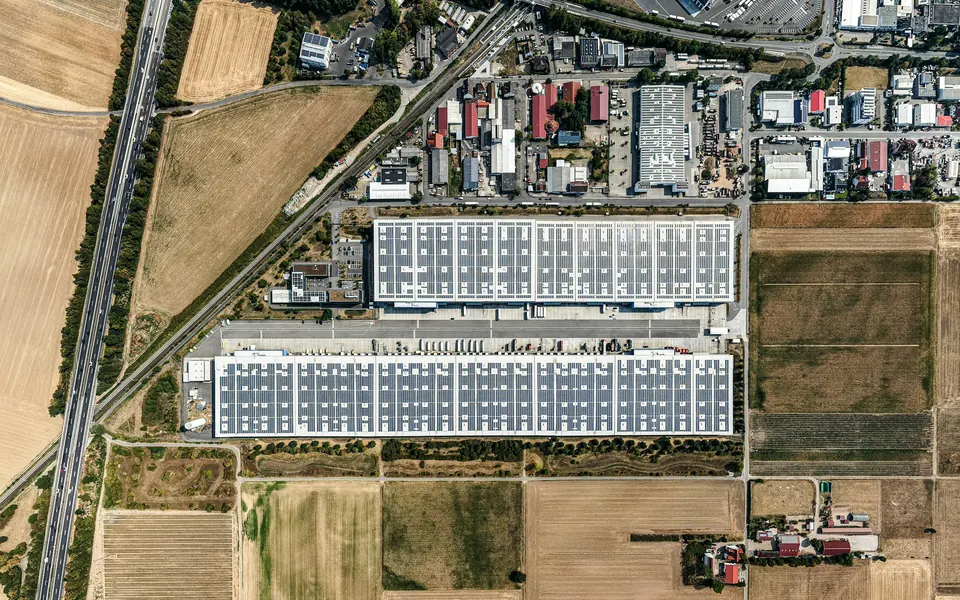
A shopping mall solar system is a solar energy system installed on the roof, car park or auxiliary structures of a shopping centre or large retail building to cover its own consumption. There are three main reasons these buildings stand out: the usable surface area is large, consumption is concentrated in daytime hours, and energy is one of the major items in operating costs.
While the installed capacity of a small shop is limited to a few roof modules, a large supermarket or mall roof can allow far higher installed capacity. This scale requires more extensive work on design, structural assessment, connection capacity and operation. Antalya's solar potential also makes this scale meaningful: according to PVGIS 5.3, a 1 kWp system at the optimum tilt in central Antalya has a theoretical annual yield of about 1,656 kWh. Since panels on flat roofs are usually laid at a lower tilt, the real figure is calculated by project-specific simulation.
Large flat roofs: opportunity and technical constraints
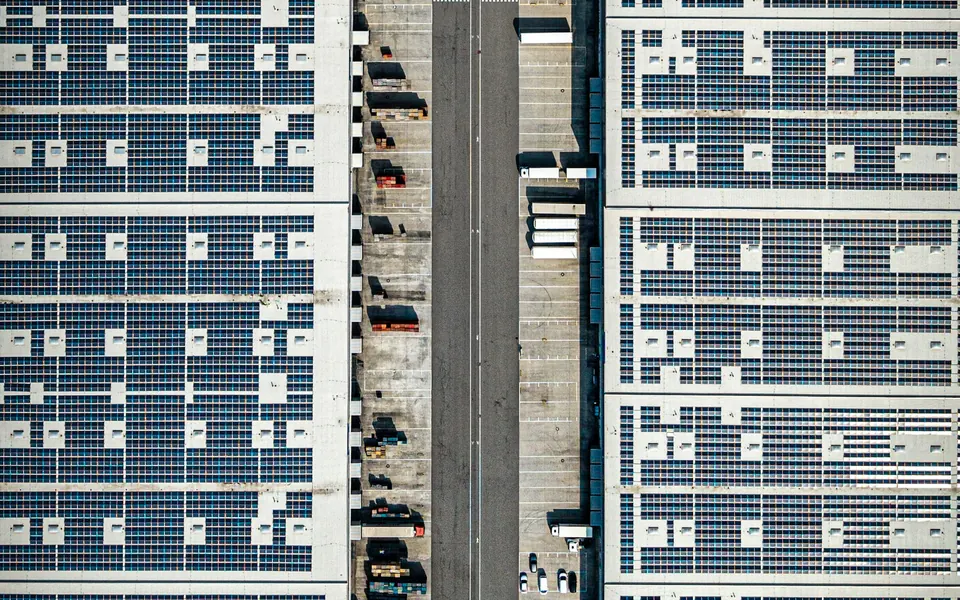
Although mall and supermarket roofs often look wide, flat and unobstructed, many elements on them affect the placement of solar panels:
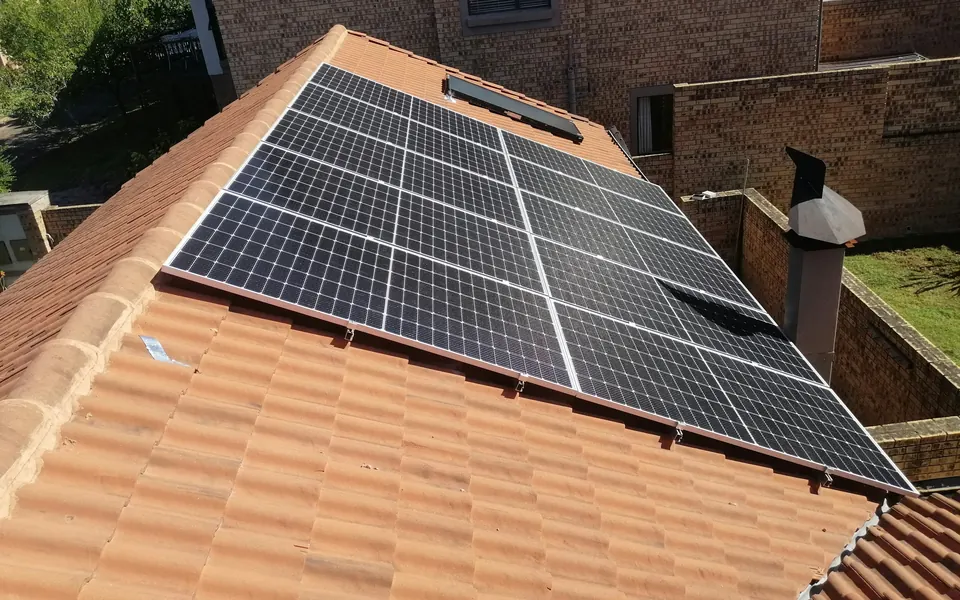
- Roof type: On membrane-covered concrete roofs, ballasted or mechanically fixed mounting systems are used; on trapezoidal metal sheet roofs, fixings suited to the cladding are used.
- Structural capacity: Wide-span steel roofs may have limited spare load capacity. A structural report should be obtained for ballast weight and wind loads.
- Roof equipment: Air-handling units, chillers, ventilation and exhaust outlets both cast shade and need service areas.
- Rooflights and smoke vents: These elements must not be covered, and the necessary clearance must be left around them.
- Fire and maintenance corridors: Walkways for fire brigade access and maintenance must be planned between panel blocks.
- Waterproofing and roof warranty: Mounting must be designed so as not to compromise the integrity of the existing waterproofing or any roof covering warranty.
Because of these constraints, there is a difference between the gross area of the roof and the net area on which panels can be placed. During the site survey, the positions and service needs of roof equipment should be mapped in detail.
Daytime load in Antalya: refrigeration, air conditioning and lighting
The consumption of large retail buildings is concentrated in a few main items. In supermarkets, refrigerated display cases and cold rooms run day and night. In malls, shared-area air conditioning, lighting, escalators and lifts are in operation as long as the shops are open.
| Load group | Operating time | Match with solar output |
|---|---|---|
| Shared-area and shop air conditioning | Throughout opening hours, heavy in summer | High |
| Refrigerated display cases and cold rooms | 24/7, load rises in summer | High for the daytime share |
| Lighting | Throughout opening hours | High for the daytime share, low in the evening |
| Escalators and lifts | Throughout opening hours | Medium |
| Car park ventilation and lighting | All day, continuous in covered car parks | Medium |
| IT, security and automation | 24/7 | Part of the base load |
Antalya's long, hot summer drives up air-conditioning and refrigeration loads. In the same period, shopping activity can also increase with the tourist season. According to PVGIS monthly data, the theoretical output for 1 kWp in Antalya is about 159 kWh in June, 168 in July and 167 in August. In other words, the months of rising cooling demand are also the months of high output. This overlap makes the potential of solar energy in Antalya particularly meaningful for large retail buildings.
Matching the load profile with production
When sizing the system on Antalya shopping mall solar projects, looking only at the roof area is not enough. The real question is how much of the energy generated will be consumed instantly inside the building. For this, fifteen-minute or hourly load data available from the meters should be analysed for a period of at least one year.
The main points examined in this analysis are:
- The base load level during daytime hours,
- Differences in consumption between weekdays and weekends,
- Changes in consumption between summer and winter months,
- Drops during public holidays, festive periods and the off-season,
- The existing connection capacity and transformer capacity.
If the installed capacity clearly exceeds the daytime base load, part of the output is fed into the grid; how this energy is treated is determined under current regulations as of November 2026. That is why sizing the system to the consumption profile is a sounder approach than filling the roof. Before the site survey, Solar Nexo asks the facility for this data and compares several installed capacity scenarios, including the share of energy that would be fed into the grid. The investment decision is then based on a theoretical analysis with its assumptions clearly stated. We explain how to read consumption data in detail in our article on consumption analysis for an Antalya solar power plant.
Car park carports and additional areas
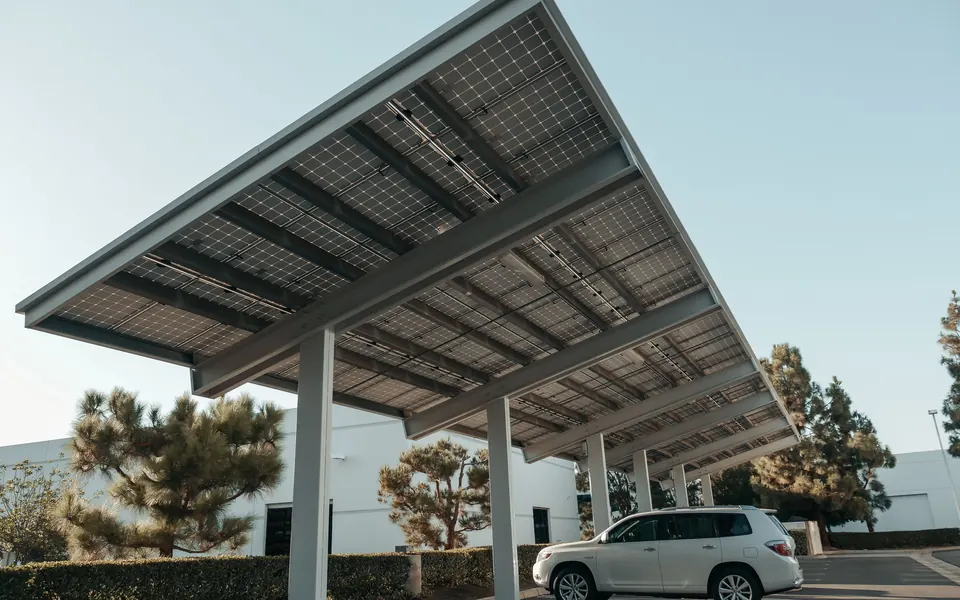
The open car parks of malls and supermarkets offer a large generating area in addition to the roof. Solar carports built over the car park protect customers' cars from the sun, provide comfort on hot summer days and increase installed capacity without adding load to the roof structure. In carport design, foundations and the soil survey, wind loads, rainwater drainage, vehicle clearance height and lighting integration are handled together.
Carport areas are also well suited to being combined with electric vehicle charging points later on. Cable trenches and switchboard capacity can be planned for this possibility in the first phase. For the general framework of the topic, see our article on carports and car park solar energy.
Shared areas, tenants and roof use in malls
Unlike supermarkets, malls are buildings with many tenants. Shared-area consumption is usually supplied through subscriptions held by the mall management, while shops may have their own meters. This structure determines which consumption point the solar plant is connected to and who receives the benefit.
In practice, the approach most often considered is to connect the system to shared-area consumption, because loads such as air conditioning, lighting and escalators mostly fall within this scope. Roof ownership, management agreements and the provisions of tenant leases should be reviewed before the project. Where the building owner and the operator are different parties, roof leasing models may also come onto the agenda; we discuss this in our article on roof leasing for solar power plants in Antalya.
Retail chains and Antalya solar power plants: multi-branch monitoring
When retail chains and store groups invest in Antalya solar power plants, they face a management challenge that a single large building does not: tracking many branches in different districts from one centre. Since each branch differs in roof, orientation and consumption, system performance needs to be monitored in a comparable way.
The main points to consider in multi-branch monitoring are:
- Bringing all branches together on the same monitoring platform, with access rights by branch,
- Using comparable indicators such as yield per kWp and performance ratio,
- Automatically forwarding fault and performance-drop alarms to the people responsible,
- Preparing monthly production reports centrally,
- Defining a standard design and product template for similar roofs.
Differences in irradiation between districts must also be taken into account. According to PVGIS, the theoretical annual yield is about 1,615 kWh/kWp for Alanya, 1,649 for Manavgat and 1,664 for Kaş. Branch performance should be interpreted with these differences in mind. For the concept of performance ratio, see our article on performance ratio for Antalya solar power plants, and for monitoring infrastructure, our article on remote monitoring for Antalya solar power plants.
Investing in solar energy in Antalya: process and maintenance
For large commercial buildings, the process consists of the site survey, consumption analysis, structural assessment, design, the grid connection application to Akdeniz EDAŞ (the local electricity distribution company), installation and acceptance. Installation work must be planned so that it does not affect customer safety or business operations while the shops are open.
During operation, the dust and pollen that come with the conditions of solar energy in Antalya, plus salty air for buildings near the coast, cause soiling that requires regular cleaning. As an authorised dealer of TommaTech and CW Enerji, Solar Nexo uses original, invoiced products; panels carry a 30-year performance warranty, inverters a 2-, 3- or 5-year factory warranty, and the manufacturer warranty documents are handed over. After installation, 24/7 technical support is provided, and maintenance and repair services are also offered for systems installed by other companies. For every solar topic in the region, use our Antalya solar power plant guide.
Conclusion
With their large roofs, car parks and heavy daytime consumption, malls, supermarkets and retail chains are strong candidates for solar energy. On Antalya shopping mall solar projects, the right result comes from sizing the system to the load profile rather than the roof area, planning roof equipment and fire corridors from the start, clarifying the tenant and subscription structure and setting up central monitoring for multi-branch operations. If you would like to request a free site survey for your facility, get in touch with Solar Nexo.
Frequently asked questions
Can solar energy be installed on a shopping mall roof?
Yes, a solar energy system can be installed on mall roofs with suitable structural capacity. However, air-handling units, chillers, rooflights and smoke vents on the roof restrict the layout. Fire and maintenance corridors must also be planned. A mounting system suited to the membrane or trapezoidal sheet covering must be chosen, the waterproofing must be preserved, and the connection application must be processed through Akdeniz EDAŞ under current regulations.
Why is solar energy a good fit for supermarkets?
In supermarkets, refrigerated display cases, cold rooms, air conditioning and lighting run continuously during daytime hours, so most of the energy generated can be used inside the building. In Antalya, solar output reaches its highest levels just as refrigeration load rises in summer. Large flat roofs and open car parks also offer suitable surfaces for installation. System capacity should still be set according to the load profile.
Should system capacity be based on roof area?
No, system capacity should be based primarily on the consumption profile. If installed capacity clearly exceeds the daytime base load, part of the output is fed into the grid, and how that energy is treated depends on current regulations. That is why at least one year of fifteen-minute or hourly load data is analysed, taking account of weekend, seasonal and holiday variations. The roof area only sets the upper limit.
Which meter is a mall solar plant connected to?
In malls, the solar plant is usually considered for connection to the shared-area subscription held by the management, because loads such as air conditioning, lighting and escalators mostly fall within this scope. If tenant shops have separate meters, how the benefit is shared must be discussed separately. Roof ownership, management and lease agreements should be reviewed before the project, and the connection arrangement clarified with Akdeniz EDAŞ.
Does a car park carport make sense for a mall?
For malls and supermarkets with open car parks, a carport is often a sensible additional area. It protects customers' cars from the sun, adds comfort in summer and increases installed capacity without loading the roof structure. The design takes account of the soil survey, wind loads, drainage and vehicle clearance height. Cable infrastructure can be planned so that electric vehicle charging points can be added later.
How are branches monitored in a retail chain?
In retail chains, the systems of all branches should be brought together on a single monitoring platform with access rights set by branch. Indicators such as yield per kWp and performance ratio are used for comparison. Fault and performance-drop alarms should be forwarded automatically to the people responsible, and monthly reports prepared centrally. Differences in irradiation between districts must also be taken into account.
How does Solar Nexo support large commercial projects?
During a free site survey, Solar Nexo inspects the roof and car park areas, roof equipment and consumption data on site and recommends a system capacity based on the load profile. As an authorised dealer of TommaTech and CW Enerji, it uses original, invoiced products and hands over the manufacturer warranty documents. Installation is planned so as not to disrupt business operations, and remote monitoring and 24/7 technical support are provided afterwards.
Sources
Want a clear calculation for your roof?
The Solar Nexo team carries out a free site survey at your address in Antalya and designs the system that suits your roof, consumption and budget.