
Short answer
Buying Antalya second-hand solar panels may look budget-friendly at first, but it carries risks such as invisible microcracks, PID-related power loss, uncertain warranty transfer and incompatibility with existing equipment. These risks can only be revealed with tests such as electroluminescence, thermal imaging and IV curve measurement. For long-life, grid-connected projects, new, invoiced products with a manufacturer warranty are the more predictable choice.
Key takeaways
- The most serious defects in second-hand panels are invisible problems such as microcracks and PID.
- Whether the manufacturer's warranty passes to the new owner depends on the manufacturer and the conditions; do not assume a warranty without written confirmation.
- Electroluminescence (EL) imaging, thermal cameras and IV curve measurement are the main ways to understand a panel's real condition.
- Mixing old and new panels in the same string, or using old inverters against current grid connection requirements, creates compatibility risks.
- Second-hand equipment can be considered in limited cases, such as small non-critical off-grid applications or spares of the same model, provided it is tested and documented.
We often see people searching for Antalya second-hand solar panels, especially homeowners and small businesses who want to use their budget carefully. Listing sites offer panels from dismantled plants, used inverters and batteries. On paper this option looks attractive, but in reality it carries hidden technical risks. In this article we take an engineering view of the risks of second-hand equipment, the test methods that reveal those risks and the situations in which buying used can make sense.
To look at the subject properly, let us say this from the start: a solar power plant (GES) is an investment that is expected to operate for many years. What matters is therefore not how the equipment looks today, but its history and its future performance.
Why Does the Market for Antalya Second-Hand Solar Panels Call for Caution?
Second-hand panels usually come from three sources: products removed from plants that are being refurbished or upgraded, panels taken off damaged roofs, and unused stock that has been sitting in a warehouse. Each of these sources has a different risk profile. A panel from a refurbishment project has worked under the sun for years; a panel removed from a damaged roof may have taken an impact; and a product left in storage may have been affected by moisture if it was not kept in suitable conditions.
The problem is that this history is often unknown. If the seller cannot document which plant the panel came from, how it was removed and how it was transported, the buyer has to rely entirely on appearance. Yet the most serious defects in a panel are not visible from the outside.
Hidden Risks: Microcracks, PID and More
Intact-looking panel glass does not mean that the cells inside are intact too. The table below summarises defects commonly found in second-hand panels and how they can be detected.
| Defect | What does it mean? | Is it visible? | Detection method |
|---|---|---|---|
| Microcrack | Fine fractures in the cells; over time they can cause power loss and hot spots | No | Electroluminescence (EL) imaging |
| PID | Potential-induced degradation; can cause power loss | No | EL imaging, IV curve |
| Hot spot | Overheating of a cell or connection | Usually not | Thermal camera |
| Bypass diode failure | Failure of the protective component in the junction box | No | Thermal camera, IV curve |
| Delamination | Separation of the layers | Sometimes | Visual inspection |
| Backsheet cracking | Cracks in the rear protective layer; insulation risk | Sometimes | Visual inspection, insulation measurement |
Microcracks usually form during improper removal, stacking and transport. When panels are stacked flat on top of each other or subjected to bending loads during removal, invisible fractures can appear in the cells. These fractures may not cause noticeable power loss on the first day, but with temperature changes they can widen over time and reduce output. We describe the layers and structure of a panel in more detail in our solar panel lifespan and degradation article.
Uncertainty Over Warranty Transfer
When you buy a new panel, one of the most important safeguards is the manufacturer's warranty. With a second-hand product, that safeguard becomes uncertain. Whether the warranty can be transferred to the new owner depends on the manufacturer's warranty terms, the original invoice, the registration of the serial number and how the product was removed. In some cases, even removing the product from its original installation site can affect the warranty conditions.
For this reason, before assuming that a second-hand product is under warranty, we recommend obtaining written confirmation from the manufacturer or an authorised distributor, quoting the serial number. A seller's verbal statement gives you no protection if a fault occurs. We examined the general logic of warranty terms in our solar panel warranty terms article.
Output Loss and Incompatibility in Antalya Solar Plant Projects
Panels age over time, and their power falls below the value on the label. The rate of this ageing depends on the panel technology, the operating conditions and the maintenance history. Conditions for solar energy in Antalya are favourable, but hot summers and high irradiation also mean that panels go through intense thermal cycling year after year. The real power of a panel whose label can still be read can only be found out by measurement.
Incompatibility is a separate problem. In Antalya solar plant projects, a common idea is to add a few second-hand panels to an existing system. However, combining panels with different current and voltage ratings in the same string can make the string operate according to its weakest panel. With older inverters, the input voltage range, software support and compliance with current grid connection requirements must be questioned. As of November 2026, under current regulations, you need to confirm before installation whether equipment for a grid-connected system meets the technical requirements and documents requested at the acceptance stage by Akdeniz EDAŞ, the local distribution company.
Test Methods: EL, Thermal Camera and IV Curve
The only reliable way to assess a second-hand panel is to test it. The main methods are:
- Electroluminescence (EL) imaging: A current is applied to the panel and the light emitted by the cells is captured with a special camera. Defects such as microcracks, broken cells and PID appear as dark areas in these images.
- Thermal camera: The surface temperature of an operating panel is mapped. Hot spots, bypass diode failures and overheating connections are detected with this method. For details, see our panel inspection with a thermal camera article.
- IV curve measurement: The panel's current-voltage characteristic is measured and compared with the label values. This measurement shows how much power the panel can actually deliver and where the losses come from.
- Insulation measurement and visual inspection: Cracks in the backsheet, damage to the junction box and the condition of the connectors are checked.
These tests must be carried out on each panel individually; a few panels from a batch testing well does not prove that the rest are sound. Receiving the test results as a written report is an important safeguard for the buyer. If a listing for Antalya second-hand solar panels does not come with such a report, it is reasonable to ask the seller to agree to an independent test; a refusal is itself a warning sign.
Risks of Second-Hand Inverters and Batteries
Inverters are the most electronics-intensive component of a plant. In a used inverter, the fans, capacitors and other electronic parts may have operated under thermal stress for years. If the error logs, software version and warranty status cannot be accessed, it is hard to estimate the device's remaining life. A second-hand inverter should therefore only be considered if its fault history, software status and warranty information can be documented.
With batteries, the risk is even more pronounced. How many cycles a lithium battery has gone through, at what temperatures it was used and whether it has been deeply discharged cannot be seen from the outside. If the battery management system records are not accessible, there is no way to know how much capacity remains. A damaged battery can also pose a safety risk.
When Can Second-Hand Equipment Make Sense?
Rejecting second-hand equipment outright is not right either. In some limited cases it can be considered, provided it has been tested and documented:
- Small, non-critical off-grid applications: Uses where a fault would not have serious consequences, such as garden lighting or a small hobby system.
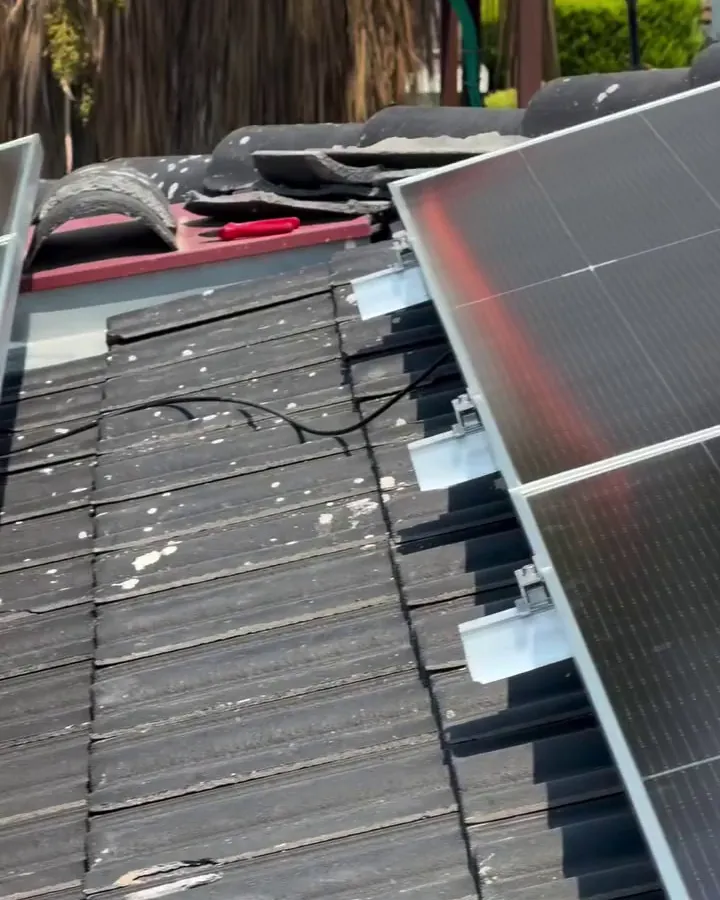
- Spares of the same model: Finding a tested unit of the same model, no longer in production, to replace a failed panel in an existing plant. We also cover this topic in our repowering old solar plants article.
- Training and test installations: Systems built for learning purposes, with no long-term output expectations.
The situation is different for grid-connected, net-metered or commercial projects. These projects require predictable output for many years, and product documents matter in the acceptance processes. For investments in solar energy in Antalya, second-hand equipment is generally not recommended for such projects because of the uncertainty it brings.
Investing in Solar Energy in Antalya: New Products and the Authorised Dealer Difference
The main advantage of a new product is predictability. A product with an invoice, a serial number and a manufacturer warranty document has a known history. As an authorised dealer of TommaTech and CW Enerji, Solar Nexo works with original, invoiced products; panels come with a 30-year performance warranty, while the product warranty varies by model. Inverters carry a 2, 3 or 5-year factory warranty depending on the model, and lithium batteries a 5-year, 8,000-cycle warranty. The manufacturer warranty documents are handed over to you when the installation is complete.
We explained what buying from an authorised dealer means in detail in our Antalya solar panel authorised dealer article. In short, if a fault occurs, you know from the start whom to contact and which document to use to make your claim.
Conclusion
Antalya second-hand solar panels may look attractive at first glance, but they bring risks such as microcracks, PID, uncertain warranty transfer and incompatibility. These risks can only be revealed through tests such as EL imaging, thermal camera inspection and IV curve measurement. Apart from small, non-critical applications, new, invoiced products with a manufacturer warranty are the safer route for long-life, grid-connected projects.
For the overall framework of solar plant investments in Antalya, take a look at our Antalya solar power plant guide. If you would like us to assess a quote you have received or your existing equipment, the Solar Nexo team will help you with a free site survey.
Frequently asked questions
Does it make sense to buy second-hand solar panels?
For most grid-connected, long-term projects it is not recommended, because risks such as microcracks, PID and uncertain warranty affect output and the predictability of the investment. In limited cases, such as small non-critical off-grid applications or the need for spares of the same model, it can be considered if each panel has been tested individually and the results documented in writing.
What is a microcrack and how can it be detected?
Microcracks are fine fractures in panel cells that cannot be seen with the naked eye. They usually form during improper removal, stacking or transport and can lead to power loss or hot spots over time. Even if the panel glass looks intact, the cells may be damaged. The main way to detect microcracks is electroluminescence (EL) imaging.
What is PID and why does it matter for second-hand panels?
PID stands for potential-induced degradation, an effect that can cause power loss in panels. It can appear after a panel has operated under certain conditions for years and is not visible from the outside. Whether a second-hand panel is affected by PID can be determined with EL imaging and IV curve measurement. That is why testing before purchase is important.
Does the warranty of a second-hand panel pass to the new owner?
This depends on the manufacturer's warranty terms and does not apply in every case. Factors such as the original invoice, serial number registration and how the product was removed can affect the warranty status. Before assuming a warranty, you should obtain written confirmation from the manufacturer or an authorised distributor, quoting the serial number. A seller's verbal statement gives no protection if a fault occurs.
Which tests should a second-hand panel go through?
The main tests are electroluminescence (EL) imaging, thermal camera inspection, IV curve measurement, insulation measurement and visual inspection. EL reveals microcracks and PID, the thermal camera shows hot spots and diode failures, and the IV curve shows the panel's real power. The tests should be carried out on each panel individually, and the results should be provided as a written report.
Can I connect old panels to the same system as new ones?
It may be technically possible, but it requires careful design. When panels with different current and voltage ratings are combined in the same string, the string may operate according to its weakest panel and losses increase. Different panel groups should be assessed in separate strings and on suitable MPPT inputs. Before making this decision, it is advisable to have an engineer review the panel and inverter ratings.
Is buying a second-hand battery risky?
Yes, second-hand batteries carry more pronounced risks than panels. How many cycles the battery has gone through, at what temperatures it was used and whether it has been deeply discharged cannot be seen from the outside. If the battery management system records are not accessible, there is no way to know the remaining capacity. A damaged battery can also pose a safety risk, so a new product with a warranty should be preferred.
Sources
Want a clear calculation for your roof?
The Solar Nexo team carries out a free site survey at your address in Antalya and designs the system that suits your roof, consumption and budget.