
Short answer
Antalya solar plant energy storage lets a business store part of its daytime solar output in a battery and use it in the evening, during peak tariff hours or in a grid outage. Correct sizing rests on two values: the power (kW) of the load to be supplied and the energy (kWh) that load needs over its duration. Battery room, ventilation, temperature and fire safety requirements belong in the project.
Key takeaways
- At business scale, batteries are used to raise self-consumption, cover evening loads and supply critical loads during outages.
- Sizing involves two separate questions: how many kW must be supplied, and for how many hours that power must be sustained (kWh).
- High-voltage lithium batteries, combined with high-voltage hybrid inverters, stand out in business-scale storage projects.
- In Antalya summers, temperature control, ventilation and fire detection in the battery room are a mandatory part of the design.
- The lithium batteries supplied by Solar Nexo carry a warranty of 5 years / 8,000 cycles.
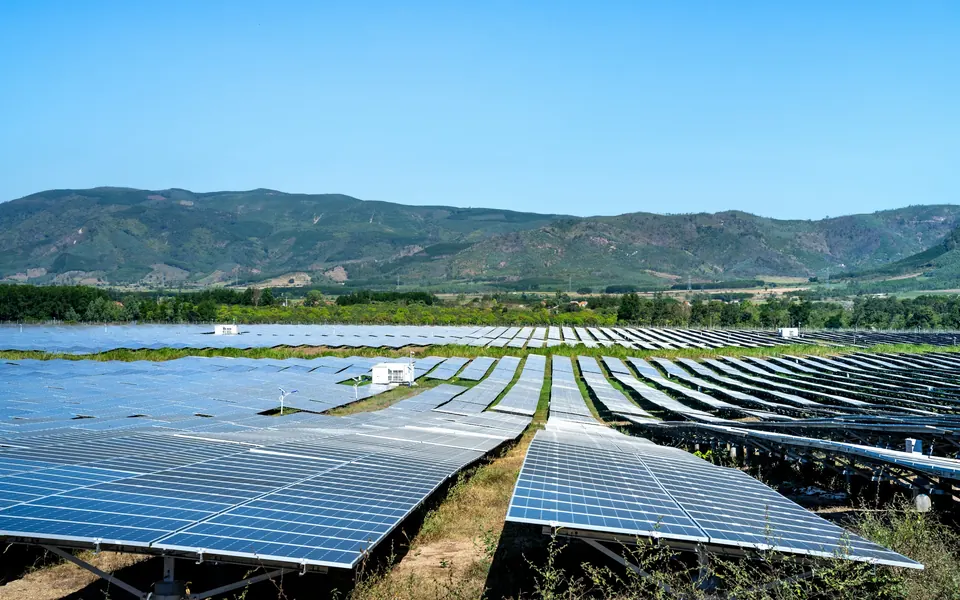
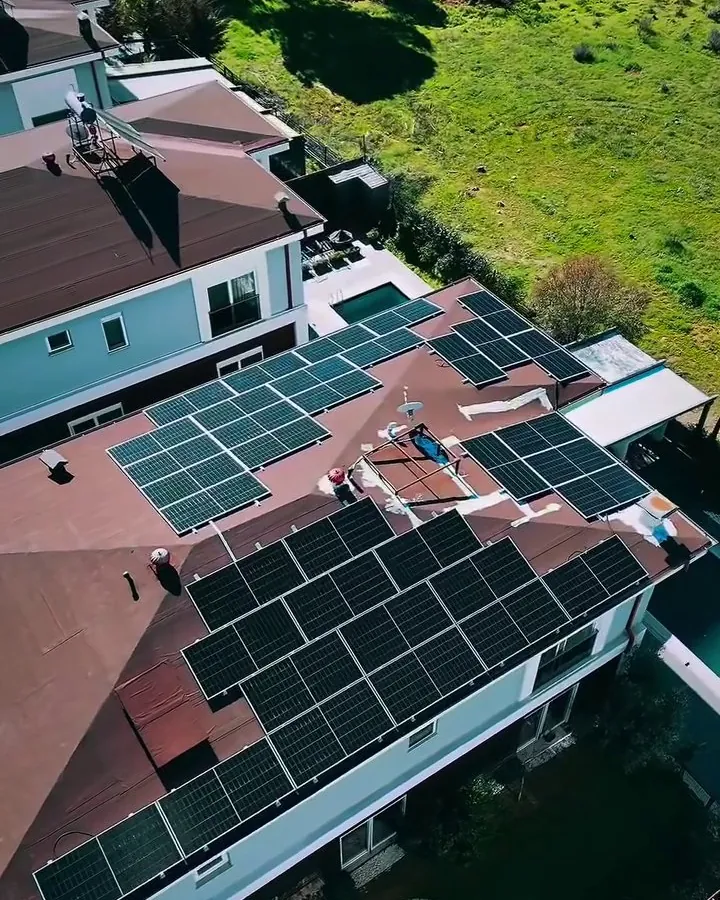
The question of Antalya solar plant energy storage is no longer asked only for mountain houses or off-grid sites. Hotels, cold stores, greenhouses, workshops and factories also want to know what combining the output of a solar power plant (GES) with batteries can bring them. Unlike articles on residential LiFePO4 systems, this one focuses on business scale: why add a battery, how is capacity calculated, how should the battery room be prepared and which safety issues come to the fore? The abundance of solar energy in Antalya during the day is the basic factor that makes storage worthwhile, but the right answer is not the same for every business.
Why add a battery to a commercial or industrial solar power plant in Antalya?
A grid-connected solar plant matches generation with instantaneous consumption; output above consumption is exported to the grid, and when there is no sun, demand is met from the grid. A battery adds a time dimension to this balance. For businesses, three main purposes stand out:
- Raising self-consumption: storing midday output that exceeds consumption and using it in the evening or early morning.
- Shifting load out of the peak period: reducing energy drawn from the grid during the peak tariff period that falls in the evening on a multi-rate tariff (check EPDK, the Turkish energy market regulator, for current tariff periods).
- Outage backup: supplying critical loads such as refrigeration, pumps, servers, security and lighting for a defined period when the grid goes down.
The weight of these purposes varies from business to business. A warehouse that runs refrigeration through the night and a workshop that operates only during the day have completely different storage needs. That is why the design starts with the load profile, not the equipment.
How does it differ from a residential system?
In a home, a battery usually means a buffer of a few kilowatt-hours for evening lighting, household appliances and short outages. At business scale, the loads are larger, operating hours are longer and the cost of an outage is often higher. Three-phase loads, motor inrush currents, power factor correction and compatibility with an existing generator all enter the design. If you are curious about the basic properties of the battery chemistry, our article on LiFePO4 batteries explains the fundamentals on the residential side; here we focus on the differences that scale brings.
How an Antalya solar plant energy storage system is structured
Business-scale storage solutions usually use a hybrid inverter architecture. The hybrid inverter manages the DC energy from the modules, the charging and discharging of the battery, and the flow between the grid and the loads through a single device. The diagram below summarises this flow.
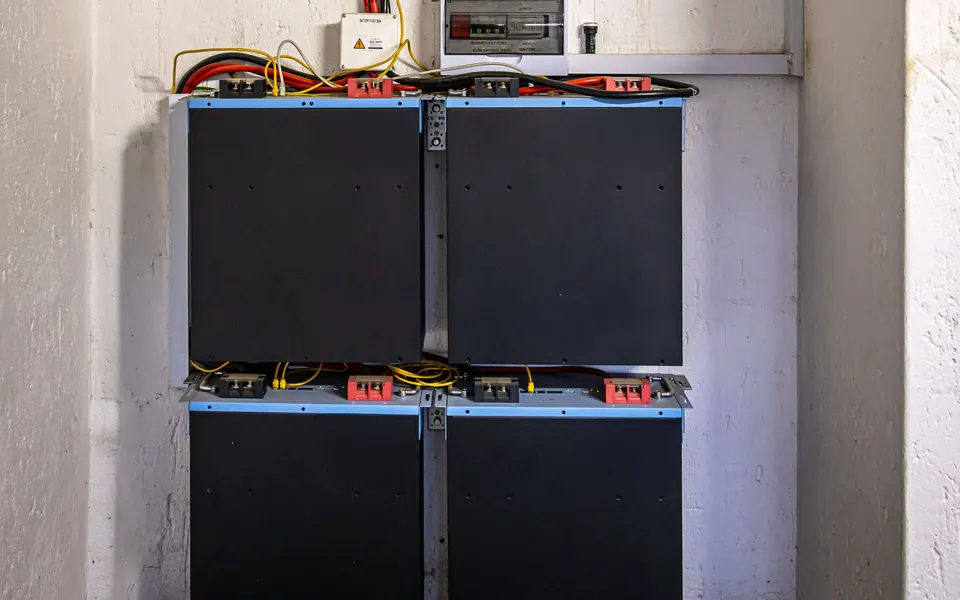
For this configuration, Solar Nexo's product range includes TommaTech high-voltage hybrid inverters, high-voltage lithium batteries and All-in-One solutions. In a high-voltage architecture the battery modules are connected in series to create a high DC voltage; for the same power, this means lower current, thinner cables and lower losses. That is why high-voltage systems are frequently chosen for business-scale projects. For the current product list, see our products page.
Sizing logic: separating kW from kWh
The two concepts most often confused in Antalya solar plant energy storage projects are power and energy. Power (kW) shows how much load you can supply at the same time; energy (kWh) shows how long you can supply that load. Battery capacity is expressed in kWh, while the discharge capability of the inverter and battery is expressed in kW. If either is undersized, the system will not achieve its purpose: a high-capacity but low-power system cannot carry the critical loads simultaneously, and a high-power but small-capacity system runs empty quickly.
Theoretical example (assumption): A business drawing an average load of 25 kW in the evening wants to cover this load from the battery for 4 hours. The energy required is 25 kW × 4 h = 100 kWh. However, not all of the battery can be used; once the depth of discharge specified by the manufacturer, inverter efficiency and an ageing margin are added, the nominal capacity must be chosen above this value. The system must also be able to deliver at least 25 kW of continuous discharge power and, if there are motors with high starting currents, cover those peak loads as well. This example only illustrates the method; hourly consumption data is essential for a real project.
| Purpose | Decisive value | Data required | Design note |
|---|---|---|---|
| Raising self-consumption | Daily surplus generation (kWh) | Hourly generation and consumption profile | Battery is sized to store the average surplus |
| Shifting load out of the peak period | Consumption during the peak period (kWh) and peak power (kW) | Consumption data by tariff period | Check the limit of energy that can be charged from solar |
| Outage backup | Critical load power (kW) × duration (h) | List of critical loads | Critical loads are grouped on a separate board |
| Motor loads | Starting current and peak power | Motor nameplate data | Consider a soft starter or drive |
How much does solar energy in Antalya fill the battery?
Whether the battery can be filled every day depends on the plant's surplus generation above consumption. According to PVGIS 5.3 data, monthly theoretical yield per 1 kWp of installed capacity in central Antalya rises to 168 kWh/kWp in July, while it sits at 99 kWh/kWp in December and January. This difference shows that a battery that fills easily in summer may stay at a lower state of charge in winter. If the design is based only on the summer months, part of the capacity may sit idle in winter; if it is based only on winter, the summer surplus goes to the grid. For most businesses, the right point is found by examining the year-round consumption and generation profiles together.
The battery room in Antalya: temperature, ventilation and fire safety
The life and safety of lithium batteries are directly linked to the environment they operate in. Because outdoor temperatures in Antalya stay high in summer, placing the battery bank against a sun-exposed wall, in an unventilated storeroom or in a hot space under the roof is not appropriate. The general principles for a battery room are:
- air conditioning and ventilation to stay within the operating temperature range specified by the manufacturer,
- a raised floor and humidity control against the risk of flooding,
- smoke and heat detection, suitable fire suppression equipment and an emergency plan matched to the fire scenario,
- enough working clearance for maintenance and intervention, a locked entrance and warning signs,
- suitable fuses and disconnectors on the DC lines, and accessible isolation points to shut the system down in an emergency.
In coastal districts, humidity and salty air pose an additional risk for the fixings and switchboard equipment in the battery room. An enclosed, air-conditioned room limits these effects as well. When choosing the room's location, leaving space for new modules with a future capacity increase in mind also pays off in the long run.
The battery management system (BMS) supports safe operation by monitoring cell voltages, temperature and currents, but it does not replace proper room conditions. Since fire safety requirements may vary with the building's use and local fire brigade regulations, the relevant legislation and the opinion of the competent authority should be taken into account at the design stage. For the general framework, see our article on solar plant fire safety.
Outage backup: separating the critical loads
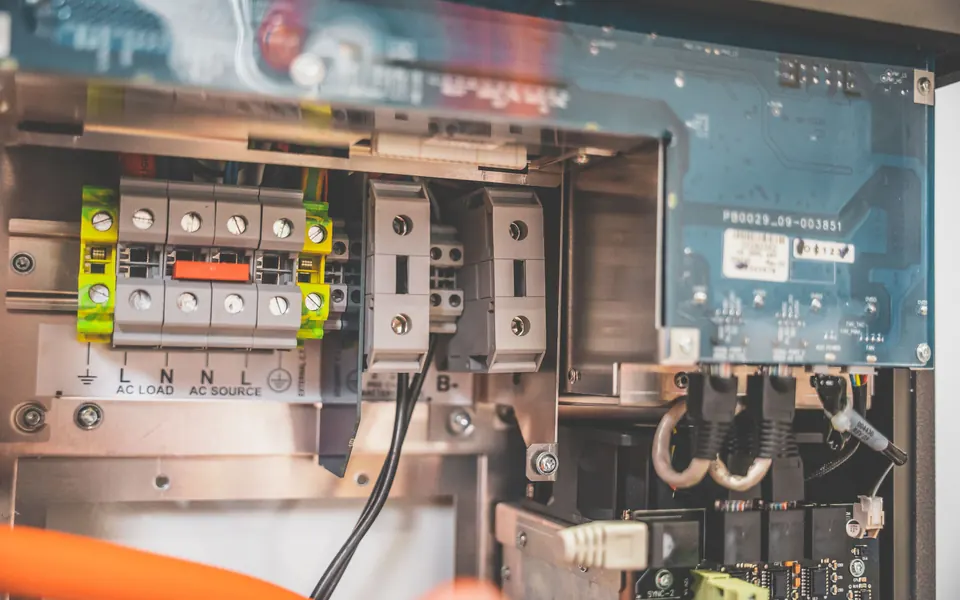
When designing outage backup for a business, trying to supply the whole facility from the battery is often unrealistic. Instead, the loads that must keep running during an outage are identified and grouped on a separate critical load board: cold room compressors, irrigation or booster pumps, server and network equipment, security cameras and emergency lighting. How much power the hybrid inverter can deliver to this board, and how the changeover takes place when the grid goes down, vary with the selected model and configuration; these points should be raised, together with the technical documentation, at the quotation stage.
In businesses that use a generator, the battery can also be configured to reduce generator running hours or to bridge short outages before the generator kicks in. For the general logic of systems that keep working during outages, our article on solar energy that works during power cuts will be helpful.
Warranty, monitoring and regulatory notes
The lithium batteries supplied by Solar Nexo carry a warranty of 5 years / 8,000 cycles; inverters come with a 2-, 3- or 5-year factory warranty depending on the model, and modules with a 30-year performance warranty. For the warranty terms to remain valid, it is important that the installation follows the manufacturer's instructions and that the ambient conditions are maintained. The monitoring system allows remote tracking of the battery's state of charge, cycle count and temperature, and flags a possible problem early.
On the regulatory side, how a system with batteries will be assessed in the grid connection application and how it relates to a net metering (mahsuplaşma) set-up should be clarified as of November 2026 according to current legislation; you need to obtain information from Akdeniz EDAŞ, the local distribution company, and from EPDK regulations. For the general steps of a solar power plant in Antalya, see our Antalya solar power plant guide.
Conclusion
Antalya solar plant energy storage is not a one-size-fits-all solution for businesses; it is a deliberate choice between self-consumption, peak tariff hours and outage backup. The right system emerges from hourly consumption data, with power (kW) and energy (kWh) needs calculated separately. Solar energy in Antalya is a strong enough resource to fill the battery, but seasonal differences, the temperature and fire safety requirements of the battery room and the separation of critical loads are integral parts of the design. During its free site survey, Solar Nexo reviews your business's load profile with you and assesses for what purpose and at what scale storage makes sense.
Frequently asked questions
Does it make sense to add a battery to my business's solar plant?
That depends on your consumption profile. Storage makes more sense for businesses with high evening and night consumption, daytime surplus generation or outage-sensitive loads. In a facility that operates only during the day and consumes most of its output instantly, the battery's contribution may remain limited. The decision should be made by examining hourly generation and consumption data together.
How is battery capacity calculated?
Capacity starts with multiplying the power of the load to be supplied by its duration. For example, theoretically supplying a 25 kW load for 4 hours requires 100 kWh of energy. Then the depth of discharge specified by the manufacturer, inverter efficiency and an ageing margin are added. The battery and inverter must also have enough continuous power to deliver this load at the same time.
What is the difference between high-voltage and low-voltage batteries?
In high-voltage batteries, the modules are connected in series to create a high DC voltage. Because the same power is transferred at a lower current, cable cross-sections shrink and losses fall. That is why they are frequently chosen together with high-voltage hybrid inverters in business-scale projects. Low-voltage systems are used mostly in homes and small applications.
What should be considered for a battery room?
The battery room should be kept within the temperature range specified by the manufacturer, ventilated and protected from humidity. In Antalya summers, sun-exposed or airless spaces are not suitable. There should be smoke and heat detection, suitable suppression equipment, a locked entrance, warning signs and accessible emergency isolation points. For building-specific fire requirements, obtain the opinion of the competent authority.
Can I supply my entire business from the battery during an outage?
Although technically possible, it is neither realistic nor efficient for most businesses. Usually the loads that must keep running during an outage are identified and grouped on a separate critical load board. Cold rooms, pumps, servers, security and emergency lighting are examples. The power the hybrid inverter can deliver to this board and its changeover behaviour vary by model, so they should be checked against the technical documentation.
What is the warranty on lithium batteries?
The lithium batteries supplied by Solar Nexo carry a warranty of 5 years / 8,000 cycles. For the warranty to remain valid, it is important that the installation follows the manufacturer's instructions, that the battery environment is kept within the specified temperature range and that the system is operated with the correct parameters. Tracking state of charge, cycle count and temperature via the monitoring system supports operation in line with the warranty terms.
Can a system with batteries be used together with net metering?
The answer depends on current legislation and the type of application. As of November 2026, how a system with batteries is assessed in the connection application and how it relates to a net metering set-up should be clarified on a project basis. You need to obtain information on this from Akdeniz EDAŞ and EPDK regulations. Solar Nexo addresses this question with you for your specific project during the survey process.
Sources
Want a clear calculation for your roof?
The Solar Nexo team carries out a free site survey at your address in Antalya and designs the system that suits your roof, consumption and budget.