Short answer
An Antalya solar plant maintenance contract is the agreement that puts in writing the scope, frequency and responsibilities of a solar plant's operation and maintenance (O&M) services. A good contract clearly defines the periodic checklist, the cleaning plan, response times by fault priority, reporting, spare parts and warranty processes, and performance tracking. Vague clauses lead to disputes between the parties when a fault occurs.
Key takeaways
- A maintenance contract should state clearly which check is carried out, how often, by whom and with which report.
- Cleaning frequency should be set not by a fixed calendar but according to dust, pollen, salt and output drops seen in the monitoring data.
- Response times should be defined separately according to fault priority, and the initial response should be distinguished from resolving the problem.
- Equipment warranties belong to the manufacturer; the contract should state who will manage warranty claims and how spare parts are handled.
- A maintenance contract can also be signed for a plant built by another company; the first step is a takeover inspection that records the current condition.
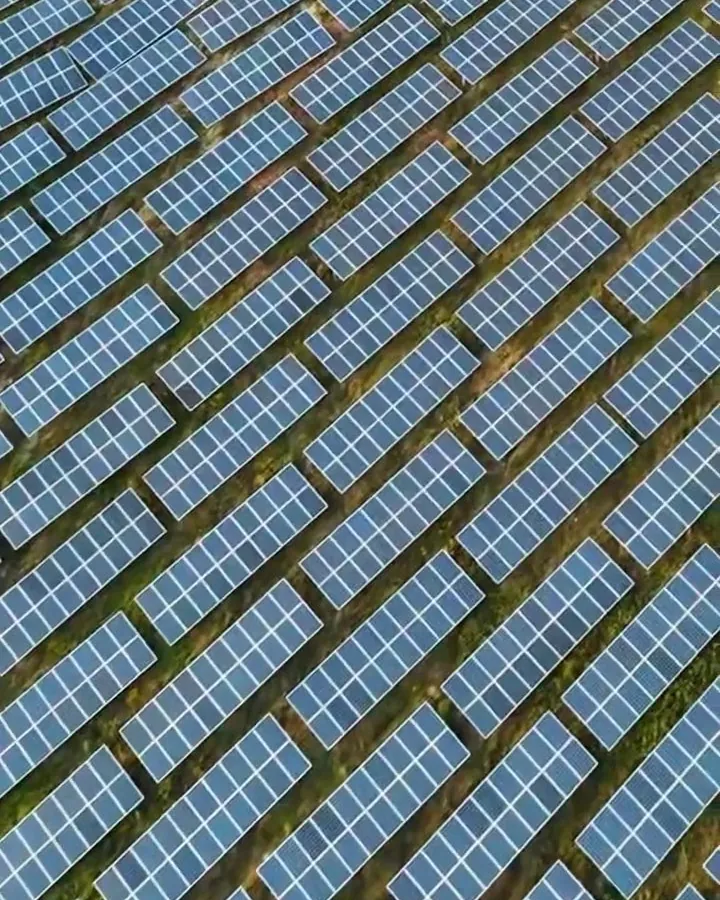
An Antalya solar plant maintenance contract is the core document that sets out how your plant will be operated in the years after installation. A solar power plant (GES) has few moving parts, but it does not maintain itself: panels get dirty, connections loosen, inverters can develop faults and the monitoring link can drop out. An operation and maintenance (O&M) contract puts in writing who will do this work, how often and to what standard.
This article covers the clauses that businesses and owners of medium to large plants in particular should pay attention to when assessing a maintenance contract. Our aim is not to impose a template on you, but to clarify the questions you should ask when reading the contract.
What Is an Antalya Solar Plant Maintenance Contract and What Does It Cover?
A maintenance contract generally consists of two main parts. Preventive maintenance covers planned checks carried out before any fault occurs: visual inspection, connection checks, cleaning, thermal inspection and electrical measurements. Corrective maintenance covers the work done when a fault or a drop in performance is detected: fault diagnosis, part replacement, warranty claims and recommissioning the system.
In addition, many contracts include a monitoring and reporting service. The plant's output is tracked remotely, alarms are assessed and a performance report is provided at regular intervals. Which services are included in the contract and which are charged separately must be made clear from the outset.
Levels of scope
The contracts found on the market can be roughly divided into two groups. Basic-scope contracts include scheduled visits, cleaning and visual checks; fault call-outs and part replacements are assessed separately. Comprehensive contracts also include monitoring, alarm tracking, corrective maintenance labour and management of warranty processes in the package. Which one suits you depends on the size of the plant, whether the business has its own technical staff and how critical lost generation is for the business. For example, a cold store that runs day and night and an office building used only during the day do not have the same expectations.
Scope of Periodic Inspections
The most important part of the contract is the list showing what will be checked during periodic visits. A general statement such as "annual maintenance is carried out" says nothing about what will be done during the visit. The table below summarises the main items that should appear in a checklist and how their frequency can be determined.
| Inspection item | Content | How is the frequency set? |
|---|---|---|
| Visual inspection | Panel glass, frames, mounting system, cable routes | At every visit |
| Connection and torque check | Terminals, connectors, bolts and clamps | According to site conditions and the manufacturer's recommendation |
| Thermal inspection | Hot spots, faulty cells, overheating connections | During scheduled visits and after suspicious drops |
| Electrical measurements | String voltage and current, insulation resistance | During scheduled visits and after faults |
| Inverter check | Error logs, fans and filters, ventilation | According to the manufacturer's maintenance instructions |
| Earthing and protection | Earthing continuity, surge arresters and fuses | During scheduled visits and after storms |
| Switchboard and cabinet check | Overheating, humidity, locks and labels | At every visit |
At the end of each visit you should ask for a report listing the checks carried out, the measured values and any shortcomings found. We explain how thermal inspection is done in our panel inspection with a thermal camera article.
Cleaning Frequency on Sites for Solar Energy in Antalya
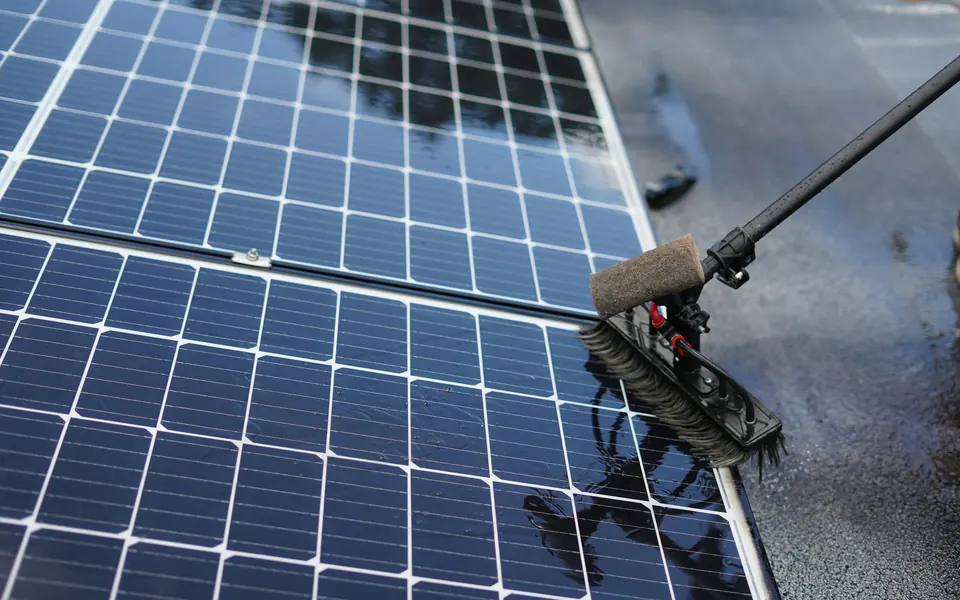
There is no one-size-fits-all number for cleaning frequency. Sites for solar energy in Antalya have very different conditions: salt build-up on the coast, dust near farmland, pollen in spring and, in the dry summer months, surfaces that go unwashed for long periods. For this reason, the contract should favour an approach based on site observation and monitoring data rather than a fixed calendar.
A practical model can be set up like this: the contract defines a minimum number of scheduled cleanings and also states that additional cleaning can be requested when output falls a certain percentage below the expected level. That percentage is agreed by the parties. The water quality, the type of brush and whether chemicals may be used must also comply with the panel manufacturer's recommendations. We cover the topic in detail in our solar panel cleaning article.
Response Time and 24/7 Technical Support
When a fault occurs, the most debated question is how quickly the maintenance company will act. In the contract, this should be defined with two separate concepts:
- Initial response time: The time it takes for the technical team to get back to you after a fault report and start a remote investigation.
- Time to reach the site and resolve the fault: The time it takes, if necessary, for the team to reach the site and fix the problem or apply a temporary solution.
These times should be separated according to the priority of the fault. A fault that shuts down the entire plant and a small drop seen on a single string are not equally urgent. Where a part needs replacing, the contract should also state clearly that the time may depend on how long the part takes to source. Solar Nexo offers 24/7 technical support; fault reports are logged through this channel and scheduled according to their priority.
Reporting and Performance Tracking
The value of a maintenance contract is measured to a large extent by the quality of its reporting. A regular report should contain at least the following: total output for the period, a comparison with expected output, the alarms and faults recorded, the work carried out, the parts replaced and recommendations for the next period.
Irradiation conditions must be taken into account when calculating expected output. According to PVGIS 5.3 data, theoretical annual output in central Antalya is around 1,656 kWh per 1 kWp of installed capacity; monthly values range from about 99 kWh/kWp in January and December to about 168 kWh/kWp in July. These values are a theoretical reference; the real comparison should be made with a performance ratio calculation based on irradiance and temperature data measured on site. We explain how the performance ratio is interpreted in our Antalya solar plant performance ratio article.
Spare Parts, Warranty and Equipment Replacement
Equipment warranties belong to the manufacturer, not to the maintenance company. Panels come with a 30-year performance warranty, while the product warranty varies by model; inverters carry a 2, 3 or 5-year factory warranty depending on the model, and lithium batteries are covered by a 5-year, 8,000-cycle warranty. The maintenance contract should state who files the claim when a fault is covered by warranty, who handles correspondence with the manufacturer and how the plant will be operated while the replacement is under way.
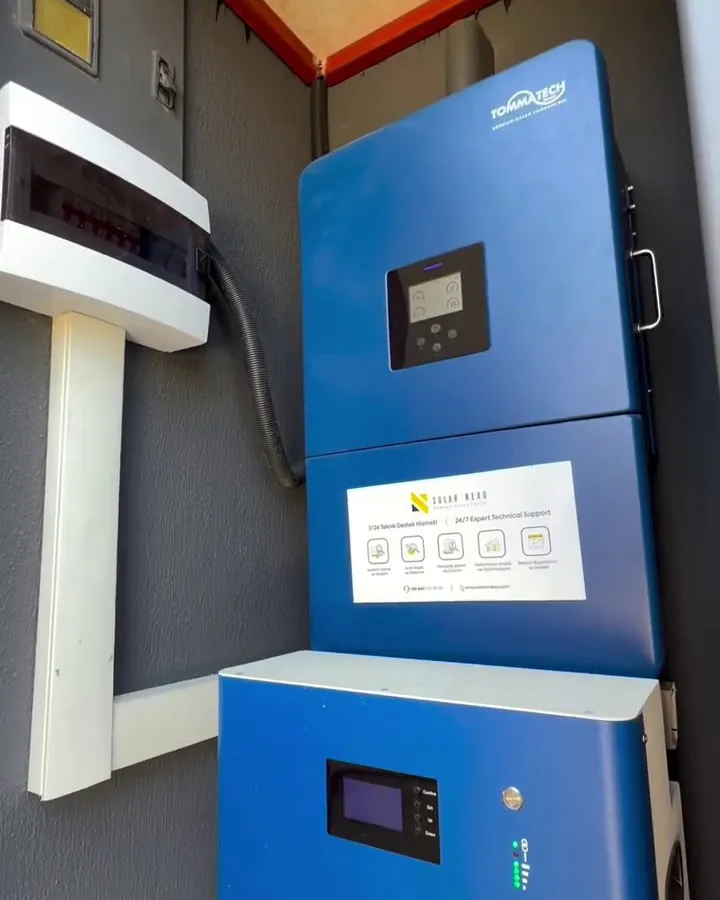
Spare parts must also be addressed clearly. The contract should state whether critical parts will be kept in stock on site or at the maintenance company, and how out-of-warranty parts will be sourced and priced. Using original, invoiced products matters for protecting warranty rights. As an authorised dealer of TommaTech and CW Enerji, Solar Nexo works with original products from these brands. We summarised common inverter faults in our inverter faults and solutions article.
Antalya Solar Plant Maintenance Contract: Plants Built by Other Companies
The company that installed your plant and the company that maintains it do not have to be the same. Solar Nexo provides maintenance and repair services not only for its own installations but also for plants built by other companies. Before an Antalya solar plant maintenance contract of this kind is signed, a takeover inspection should be carried out to record the current condition: project documents, the single-line diagram, the equipment list, warranty documents and existing faults are identified at this stage. This way, problems left over from before the takeover are kept separate from problems that arise during the contract period.
One of our service jobs in Gazipaşa is an example of this situation. At an existing plant installed by another company, five faulty inverters were replaced by our team. This was not an installation but a service and repair job; it covered fault diagnosis, selection of suitable equipment, replacement and recommissioning of the system. To see the scope of our maintenance and repair services, visit our solar plant maintenance and repair page.
Checklist Before Signing the Contract
- Are the checks to be carried out during periodic visits listed item by item?
- Are the number of cleanings and the conditions for requesting extra cleaning specified?
- Are initial response and resolution times defined separately according to fault priority?
- Are the content and frequency of reports clear?
- Is it written down who will manage warranty claims and how spare parts will be handled?
- Is it clear which work falls outside the scope of the contract and how it will be charged?
- Are the term, renewal and termination conditions of the contract clear?
Conclusion
An Antalya solar plant maintenance contract is one of the safeguards that keep your plant running at the expected performance for many years. When the inspection scope, cleaning plan, response times, reporting and warranty processes are written down clearly, both you and the maintenance company know what is expected; when a fault occurs, the focus is on the solution rather than on arguments.
For the overall framework of investing in solar energy in Antalya, take a look at our Antalya solar power plant guide. If you would like to assess the maintenance scope for your existing plant together with us, the Solar Nexo team will inspect your site with a free site survey and propose a maintenance plan that suits you.
Frequently asked questions
What should a solar plant maintenance contract include?
A good maintenance contract should clearly include the list of checks carried out during periodic visits, the cleaning plan, response times by fault priority, the content and frequency of reports, management of warranty claims, spare parts arrangements and how out-of-scope work is charged. The term, renewal and termination conditions should also be clear. Measurable clauses should be preferred over general statements.
How often should panels be cleaned in Antalya?
There is no single correct frequency; it should be set according to site conditions and monitoring data. Salt on the coast, dust near farmland and pollen in spring can build up faster. A practical approach is for the contract to define a minimum number of scheduled cleanings and allow extra cleaning to be requested when output falls clearly below the expected level. The cleaning method should follow the panel manufacturer's recommendations.
How should response time be defined in the contract?
Response time should be defined with two separate concepts: the initial response time and the time to reach the site and resolve the problem. These times should be separated by fault priority; a fault that shuts down the whole plant and a small drop on a single string are not equally urgent. If a part needs replacing, the contract should also state clearly that the time may depend on sourcing.
Can a solar plant built by another company be maintained?
Yes, the company that installed the plant and the company that maintains it do not have to be the same. Solar Nexo also provides maintenance and repair services for plants built by other companies. Before the contract, a takeover inspection recording the project documents, single-line diagram, equipment list, warranty documents and existing faults is important for making responsibilities clear.
Is the equipment warranty part of the maintenance contract?
No, equipment warranties belong to the manufacturer and are independent of the maintenance contract. Panels come with a 30-year performance warranty and a product warranty that varies by model; inverters have a 2, 3 or 5-year factory warranty, and lithium batteries a 5-year, 8,000-cycle warranty. The contract should state who manages warranty claims and how the plant is operated during the replacement.
What information should a maintenance report contain?
A maintenance report should include total output for the period, a comparison with expected output, the alarms and faults recorded, the work carried out, measured values, the parts replaced and recommendations for the next period. Expected output should be calculated taking irradiance and temperature conditions on site into account, and periods should be compared using indicators such as the performance ratio.
Does a small rooftop solar plant also need a maintenance contract?
It is not mandatory, but it is useful. For residential-scale systems, a simple contract or a scheduled maintenance visit is often enough. What matters is that remote monitoring data is checked regularly, cleaning and visual inspections are not neglected and you know from the outset whom to contact if a fault occurs. The larger the plant, the more important a written contract becomes.
Sources
Want a clear calculation for your roof?
The Solar Nexo team carries out a free site survey at your address in Antalya and designs the system that suits your roof, consumption and budget.