
Short answer
An Antalya solar plant security plan aims to protect ground-mounted and rooftop solar plants against theft, sabotage and unauthorised access in layers. Perimeter fencing and lighting form the first barrier; cameras and alarms make breaches visible; anti-theft bolts and protected cable routes make equipment harder to remove. Remote monitoring alarms report sudden output losses early and allow a fast response.
Key takeaways
- Security does not come from a single measure; it comes from perimeter protection, detection, equipment protection and response layers working together.
- On rural ground-mounted plants, theft of panels, cables and inverters is the main risk; on rooftop plants, unauthorised access and tampering come to the fore.
- Anti-theft bolts, locked inverter cabinets and protected cable routes make quick removal of equipment harder.
- A sudden drop in output or loss of communication in the remote monitoring system is often the first sign of a security incident.
- Insurance policies may ask about security measures; because cover conditions vary by policy, measures should be planned together with the insurer.
Antalya solar plant security planning should not be an add-on that comes to mind after the plant is built; it should be part of the project from the start. Solar power plant (GES) sites hold valuable panels, copper cables, inverters and sometimes batteries out in the open, often during unattended hours. Ground-mounted plants in rural areas in particular need attention when it comes to theft and sabotage. In this article, separately from fire and insurance topics, we look at layered methods for protecting a site against physical threats.
Why Does Antalya Solar Plant Security Need a Separate Plan?
Protecting a solar plant is different from protecting a warehouse or a construction site. The site is large, the equipment stands in the open and the facility runs largely unmanned. On ground-mounted plants the nearest settlement may be far away; on rooftop plants, anyone with access to the building can potentially also get onto the roof. Security measures must therefore be designed according to the type, location and size of the site.
An effective security approach consists of four layers: deterrence, delay, detection and response. Fences and lighting deter; anti-theft fasteners and locked cabinets delay; cameras, alarms and the monitoring system detect; and a defined response plan stops an incident from escalating. When one of these layers is missing, the others also lose much of their effect.
Risk Map for Ground-Mounted and Rooftop Solar Plants
Before planning measures, you need to identify which risks your site is exposed to. The table below gives a general summary of common threats and the first measures that should come to mind against them.
| Risk | Target equipment | Site where it is more common | Basic measures |
|---|---|---|---|
| Cable theft | DC and AC cables, earthing conductors | Ground-mounted plant | Buried or covered routing, locked trunking, monitoring alarm |
| Panel theft | Modules | Ground-mounted plants, easily accessible roofs | Anti-theft bolts, serial number records, cameras |
| Inverter and switchboard theft | Inverters, switchboards, communication devices | Both types | Locked cabinet, enclosed technical room, door alarm |
| Sabotage and vandalism | Panel glass, cables, meter | Land close to settlements, open roofs | Fencing, lighting, cameras, warning signs |
| Unauthorised access | Roof, technical room, switchboards | Rooftop plant | Access locks, key management, entry log |
We explained the general framework for building ground-mounted plants in our Antalya ground-mounted solar plant installation article. The security plan should be considered together with the plot selection and layout decisions discussed there, because the access road, neighbouring plots and lines of sight have a direct effect on the risks.
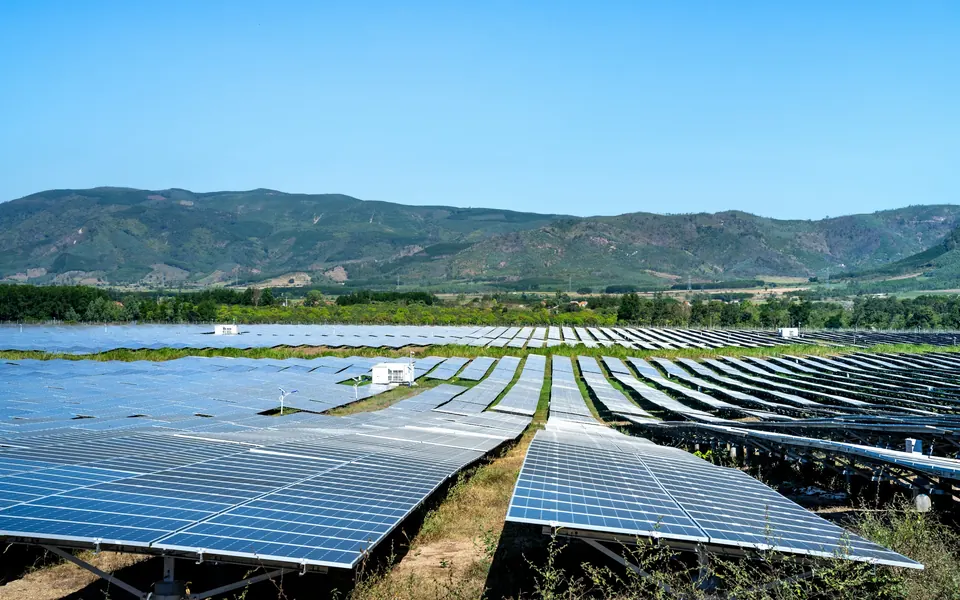
Solar Energy in Antalya: Perimeter Security on Site
Perimeter security is the first layer that makes unauthorised entry to the site harder. On ground-mounted plants, a fence that surrounds the whole site, is hard to climb and is firmly anchored to the ground is the basic measure. The bottom of the fence should be designed to prevent anyone crawling underneath, the entrance gates should be kept locked and a record should be kept of who holds the keys.
- Fence line: Leave a service road wide enough for a maintenance vehicle between the panels and the fence; this road is also useful for patrols and camera visibility.
- Vegetation: Bushes growing along the fence create hiding places and block camera views; they should be cleared regularly.
- Lighting: The entrance gate, technical room and inverter areas should be lit at night. At points far from the grid, solar LED lighting is a practical solution.
- Warning signs: Signs stating that the site is under camera surveillance and warning of high voltage increase the deterrent effect.
On rooftop plants, perimeter security means bringing access to the roof under control. Roof hatches, fixed ladders and technical room doors should be locked, and key management should be in place so that nobody goes onto the roof except for maintenance.
Antalya Solar Plant Security Systems: Cameras and Alarms
Camera and alarm systems are the detection layer that makes a breach visible. In Antalya solar plant security projects, the aim should be for these systems not only to record but also to alert someone at the moment of the incident. Cameras with night vision, motion detection and sensors along the fence can be used together for this purpose.
Some technical points to watch:
- Uninterrupted power: Camera and alarm systems should be supplied by a battery or an uninterruptible power supply so that they keep working when the grid goes down. Otherwise, thieves can disable the system simply by cutting the power first.
- Communication backup: To make sure recordings and alarms reach a remote centre, consider a mobile data backup alongside the wired connection.
- Recording storage: Footage should not be stored only on a device on site that can be stolen; where possible, it should also be kept on a remote server.
- Field of view: Cameras should cover the entrance gate, the technical room and the critical points of cable routes.
If your cameras would capture surrounding public areas or neighbouring plots, you need to act in line with the current personal data protection legislation as of November 2026.
Panel, Inverter and Cable Security
Protecting the equipment itself is the most tangible part of the delay layer. The aim is to make removal slow and laborious, either to deter theft or to buy time for a response.
- Anti-theft bolts: Bolts with special heads can be used in the clamps that fix the panels to the mounting system. Because they cannot be removed with standard tools, they make quick removal harder.
- Serial number records: The serial number of every panel and inverter should be recorded during installation together with the layout plan. This record is useful both in insurance processes and in identifying stolen equipment. At handover, Solar Nexo provides the product invoices and manufacturer warranty documents, and this paperwork also forms the basis of a serial number archive.
- Locked cabinets: Inverters and switchboards should, where possible, be placed in an enclosed technical room or in locked cabinets, with alarm sensors on the doors.
- Cable routing: On ground-mounted plants, cables should be buried at a suitable depth wherever possible or run in covered trunking. Exposed cable trays can be protected with lockable covers.
- Earthing conductors: Theft can target not only power cables but also earthing conductors. Removing the earthing creates a serious electrical safety risk, so it must always be checked during periodic inspections.
Entering a site after a cable theft is also dangerous. Cut DC cables can be live during the day, and only qualified technical personnel should intervene.
Early Detection with Monitoring Alarms
Even on sites without security cameras, the monitoring system is an important early warning tool. If the output of a string suddenly drops to zero during the day, if an inverter goes offline or if communication with the site is lost completely, these can be signs of a theft or sabotage incident just as much as of a fault.
That is why alarm thresholds and notification rules must be defined correctly in the monitoring system, and alarms should be sent to the people responsible by email or mobile notification. Because there is no output at night, communication loss and door sensor alarms become more telling after dark. We explained the details of the monitoring infrastructure in our Antalya solar plant remote monitoring article. Solar Nexo includes monitoring devices in the systems it installs and offers 24/7 technical support.
Response Plan and Periodic Security Checks
An alarm going off is not enough on its own; who receives the alarm, who goes to the site and which steps are followed must be set out in writing in advance. A simple response plan should answer these questions: Who verifies an alarm that comes in at night? If camera footage confirms a breach, who gets called? What does the person going to the site need to watch out for in terms of electrical safety? Which records are passed on to the insurer and the technical team after the incident?
Security measures also wear out over time. Gaps in the fence, dirty camera lenses, flat alarm batteries or loose cabinet locks can go unnoticed. During periodic maintenance visits, therefore, the fence line, gates, lighting, cameras and cable trunking covers should be reviewed alongside the electrical checks, and any shortcomings found should be entered in the maintenance report.
How Insurance and Security Measures Relate
Security measures and insurance complement each other, but one does not replace the other. When issuing a policy, insurance companies may ask whether the site is fenced, whether there are cameras and alarms, or whether the monitoring system is active. The scope of theft cover, the deductibles and the documents required in the event of a claim vary from policy to policy.
It is therefore important to review your security plan with your insurer and to actually apply on site the measures stated in the policy. Serial number records, installation documents and monitoring reports make things easier in the event of a claim. We covered the general framework of insurance in our solar plant insurance article and fire prevention measures in our solar plant fire safety article.
Conclusion
In Antalya solar plant security, success comes not from a single expensive system but from setting up the layers correctly. Fences and lighting deter, anti-theft bolts and locked cabinets delay, cameras and monitoring alarms detect, and a defined response plan limits the damage. On ground-mounted plants, cable and perimeter security are the priorities; on rooftop plants, access control comes first.
For the overall framework of investing in solar energy in Antalya, take a look at our Antalya solar power plant guide. If you want to review the security and monitoring infrastructure of your existing plant, Solar Nexo offers a free site survey as well as maintenance and repair services, including for systems installed by other companies. On sites built for solar energy in Antalya, secure operation is also what keeps generation running without interruption.
Frequently asked questions
Which equipment is stolen most often from solar plant sites?
On ground-mounted plants, the most frequently targeted equipment is cables, earthing conductors, panels and inverters. Cables are particularly at risk because they are easy to cut and carry away. On rooftop plants access is harder, so the risk mostly takes the form of unauthorised access and tampering. The level of risk depends on the site's location, its distance from settlements and the measures taken.
What is an anti-theft bolt?
An anti-theft bolt is a fastener with a special head that cannot be removed with standard tools. When used in the clamps that fix panels to the mounting system, it makes quick removal harder and deters theft. On its own it does not provide complete protection, but combined with cameras, alarms and the monitoring system it is an effective, easy-to-apply delay measure that buys time for a response.
Does the camera system work during a power cut?
Not unless it is supplied by a battery or an uninterruptible power supply. Camera and alarm systems must therefore always be planned with a backup power source; otherwise, cutting the power may be enough to disable the system. A mobile data backup should also be considered for the communication link, and recordings should, where possible, be stored on a remote server as well as on the device on site.
Can the monitoring system detect theft?
It is not a security system as such, but it is an important early warning tool. A string's output suddenly dropping to zero, an inverter going offline or communication with the site being lost completely can be signs of a theft or sabotage incident. If alarm rules are defined correctly and notifications reach the people responsible immediately, response times can be shortened considerably.
Which security measures should be taken on a rooftop solar plant?
On rooftop plants, the priority is access control. Roof hatches, fixed ladders and technical room doors should be kept locked, and keys should be recorded. Inverters and switchboards should be placed in a locked area, and the monitoring system should be kept active. On low, easily accessible roofs, measures such as anti-theft bolts and cameras can also be considered.
Do security measures affect insurance premiums or cover?
They can, but this depends entirely on the policy conditions. When issuing a policy, insurers may ask about measures such as fencing, cameras, alarms and a monitoring system; in some policies, certain measures may be a condition of cover. That is why it is important to review your security plan with your insurer and to actually apply on site the measures written in the policy.
Can I deal with the site myself after a cable theft?
No, you should leave the intervention to qualified technical personnel. Cut DC cables can be live during daylight hours and carry a serious risk of electric shock. If earthing conductors have also been stolen, the risk increases further. First make the site safe and report the incident to the authorities, then wait for the technical team to assess the damage, carry out a safety check and make the repairs.
Sources
Want a clear calculation for your roof?
The Solar Nexo team carries out a free site survey at your address in Antalya and designs the system that suits your roof, consumption and budget.