
Short answer
Antalya solar panel recycling means separating panels that are worn out or damaged into their glass, aluminum frame, silicon cells and copper and silver conductors so these materials can be used again. The process runs through safe removal, condition assessment, careful stacking and documented handover to a licensed waste facility. Panels that are still healthy can be reused after testing; regulatory details should be confirmed with the competent authorities.
Key takeaways
- Most of a panel's mass is glass and aluminum; the difficulty is that the layers are bonded together by lamination.
- Recycling generally proceeds through pre-dismantling, separation of the laminate, material sorting and refining.
- In repowering projects, panels should be tested before removal and sorted into reusable units and waste.
- A panel exposed to sunlight still produces voltage even when it is disconnected from the system; removal is a job for an authorized team.
- Confirm the current rules on waste classification and reporting obligations with the Ministry of Environment, Urbanization and Climate Change and with licensed facilities.
Antalya solar panel recycling is the process of taking solar panels that have reached the end of their service life, been damaged or been removed during repowering, and separating them into components such as glass, aluminum, silicon and copper so these materials can be put to use again. A solar power plant (GES) is at its cleanest on the day it is commissioned, but like any piece of equipment it will eventually need replacing. Because most Antalya solar energy investments are still relatively young, the subject gets little attention today; a sound investment plan, however, accounts for removal and waste from the very beginning.
In this article we explain in plain language what is inside a panel, how recycling works in principle, how removal is planned in repowering projects and which authorities you should turn to for waste management.
Why is Antalya solar panel recycling becoming a topic?
A panel leaves the site in one of three ways. The first is natural ageing: crystalline silicon panels operate for many years, but their output declines slowly over time. The second is physical damage: hail, debris blown around in a storm, an installation error or a fire can break the glass or cause micro-cracks in the cells. The third is a deliberate choice: replacing old modules with higher-output, new-generation panels to get more generation from the same roof.
Some of the first generation of rooftop and ground-mounted plants in Antalya are now reaching middle age. As their owners start to discuss repowering, the question of what happens to the removed panels naturally comes up. For the owner of a solar power plant in Antalya, the right question is not "will the panels be thrown away?" but "which ones can be reused, which ones go to recycling, and who documents the process?"
What is inside a solar panel?
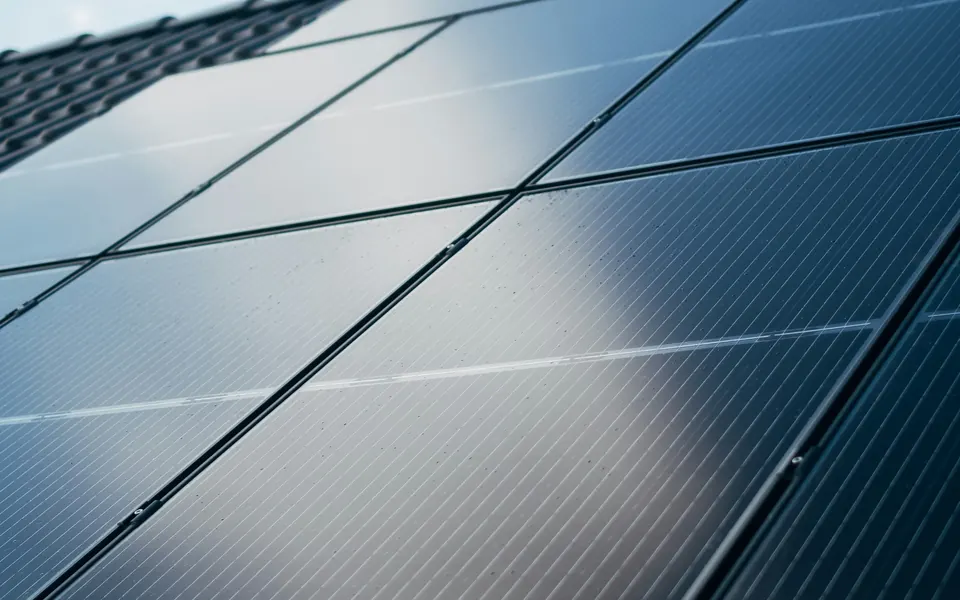
A standard crystalline silicon panel can be pictured as a layered sandwich. Most of its weight comes from the tempered glass on the front and the aluminum frame around it. Between the glass and the rear layer sits a transparent encapsulant (usually EVA or POE) that protects the cells from moisture and impact. The cells are made of silicon, while copper and silver are used in the thin ribbons that connect the cells and in the contact lines. At the back there is a polymer backsheet or, in dual-glass models, a second pane of glass. The junction box, bypass diodes, solar cable and connectors are also part of the panel.
| Component | Role in the panel | Recovery outlook |
|---|---|---|
| Tempered glass | Protects the cells from the environment and lets light through | The heaviest component by mass; can be reused when separated cleanly |
| Aluminum frame | Provides mechanical strength and mounting points | Relatively easy to remove; enters the metal recycling chain |
| Silicon cells | Convert light into electricity | Separating them from the laminate requires special processing |
| Copper and silver conductors | Connect the cells and carry current | A target for recovery as valuable metals |
| EVA / POE and backsheet | Encapsulation, moisture barrier and electrical insulation | Polymer layers that make separation harder |
| Junction box, cable, connectors | Take the DC power out of the panel | Handled separately as electronic and cable waste |
The table makes one thing clear: most of a panel is glass and metal, in other words familiar materials. The difficulty is that these materials are tightly bonded to one another by lamination.
How does panel recycling work?
Although the methods used by recycling facilities vary, the general logic is the same. First the parts that come off easily are removed, then the laminate layers are broken down, and finally the valuable materials are refined.
- Pre-dismantling: The aluminum frame, junction box and cables are removed mechanically. This step recovers a significant share of the material in clean condition.
- Separating the laminate: The layer made up of glass, encapsulant and cells is separated by mechanical crushing, thermal treatment or chemical methods.
- Material sorting: Glass cullet, metal fragments and cell powder are classified using sieving, density separation and similar techniques.
- Refining: Materials such as silicon, copper and silver go through further processing with the aim of bringing them back to a reusable level of purity.
When it comes to Antalya solar panel recycling, quality also depends on how carefully the panels were removed from the site and transported. Panels that are broken, crushed or piled up in a mixed heap are harder to separate. That is why the site side of the work matters at least as much as the facility side.
How is removal planned when repowering an Antalya solar power plant?
In repowering projects, removing the old panels needs as much planning as installing the new system. We covered the overall repowering strategy in our guide to repowering older solar plants; here we focus on removal and waste.
Inventory and testing before removal
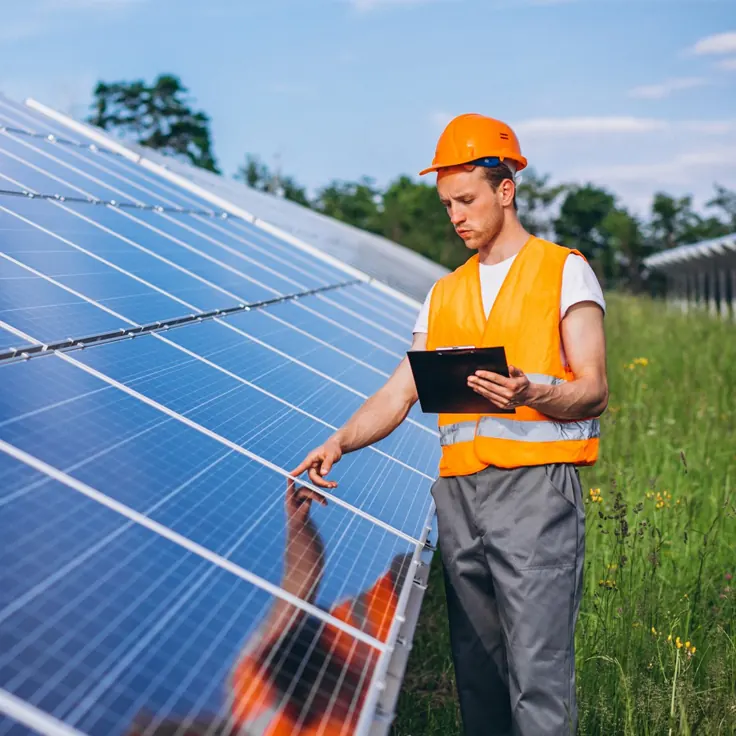
Not every panel is in the same condition. Before removal, generation data is reviewed string by string and, if necessary, a thermal camera is used to scan for hot spots. Modules that still work properly can be reused in another project once they have passed the appropriate tests. For the risks of second-hand panels and how they are tested, see our article on second-hand solar panels in Antalya. Panels with broken glass, a punctured backsheet or visible cell damage, on the other hand, should be set aside for the recycling stream.
Safe removal
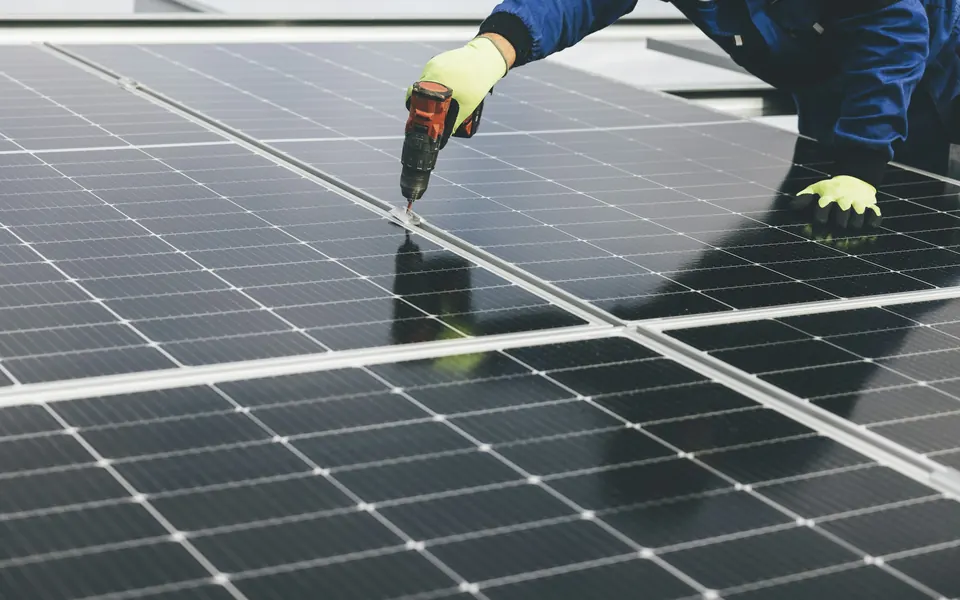
A panel exposed to sunlight produces voltage at its terminals even when it has been disconnected from the system. Before removal, the inverter and DC isolators are switched off, the strings are safely disconnected by an authorized team, and the connectors are released with the correct tool. Panels with broken glass are handled with gloves because of the risk of cuts and are stacked separately.
Stacking and transport
Removed panels are stored on pallets, protected from the weather and arranged so that the glass surfaces do not rub against each other. Panels left haphazardly in the open, whether in Antalya's summer heat or during the winter rains, create both safety and environmental problems. Labeling each pallet with the quantity, model and condition of the panels makes record keeping much easier in the next step.
Damaged panels: what to do after hail, a storm or a fire
When a panel is damaged by an unexpected event, safety comes first, then documentation, and replacement last. Do not touch a broken panel with bare hands and do not try to dismantle the system yourself. Call the company that installed the system or a technical service team, and document the damage with photographs. If your plant is insured, follow the deadlines and steps for reporting a claim set out in your policy; our article on solar plant insurance provides a general framework.
Once the damage has been assessed, replacement panels should have the same dimensions and compatible electrical ratings. Adding a panel with a different current rating to a string can drag down the performance of the entire string. The damaged modules that are removed are stacked separately as described above and passed on to the waste management process.
General guidance on waste management for solar energy in Antalya
Which waste category panel waste falls into, who is allowed to collect and process it and what records must be kept are all determined by waste legislation. The competent authority in this field is the Ministry of Environment, Urbanization and Climate Change. As of November 2026, we recommend that you confirm the practical details under the current regulations through the Ministry's announcements, its provincial directorate and licensed waste processing facilities. In this article we deliberately give no article numbers, rates or deadlines, because such rules can change and may be interpreted differently from project to project.
For owners of a solar plant in Antalya, the general path to follow in practice looks like this:
- List the quantity, brand, model and condition of the panels to be removed.
- Set aside the modules that can be reused, together with their test reports.
- For the remaining panels, contact a licensed waste collection or processing company and obtain a handover document.
- If you operate as a business, clarify with your accountant and the relevant provincial directorate whether you have a waste reporting obligation.
- Do not leave panels in general rubbish containers, on scrap heaps or on open land.
For licensed plants and corporate projects, the environmental management plan, purchase contracts and insurance terms may also define who is responsible for removal. Reviewing your contract file again is therefore a good place to start.
Extending panel life is the first step in recycling
The greenest panel is the one that keeps doing its job reliably for many years. Correct installation, regular inspections and timely intervention prevent a panel from becoming waste prematurely. Given Antalya's hot and dusty summers, the salty humidity in coastal areas and the sudden storms in winter, periodic maintenance becomes even more important.
The main points to watch for a long service life are:
- Fixing the panels with clamps and a rail system that comply with the manufacturer's installation instructions.
- Protecting cables and connectors against UV light and water, and never leaving cables taut or rubbing against edges.
- Cleaning with a suitable method during periods when soiling reduces output.
- Tracking string-level drops in the monitoring system so that problems are spotted before they grow.
We discussed in detail how panel performance changes over the years in our article on solar panel lifespan and degradation. The TommaTech panels we supply at Solar Nexo come with a 30-year performance warranty, while the product warranty varies by model. The warranty documents are handed over to the customer at the end of the installation, and they make any damage claim or replacement process much easier.
Solar Nexo's role in removing and replacing panels at Antalya solar power plants
Across Antalya, Solar Nexo provides maintenance and repair services not only for the plants it has installed itself but also for systems installed by other companies. Panel replacement, diagnosis of faulty equipment and repowering planning are all part of this service. In projects that require removal, we provide support with safe disconnection on site, sorting the panels by condition and selecting compatible new equipment. Waste processing itself is the job of licensed facilities; our aim is to prepare our customers for that process with accurate information.
For maintenance and fault-related needs you can visit our solar plant maintenance and repair page, and for a general overview see the Antalya solar power plant guide.
Conclusion
Antalya solar panel recycling may look like a minor issue today, but it belongs in the long-term picture of any investment in solar energy in Antalya. Most of a panel consists of recoverable materials such as glass and metal; the real task is to feed these materials into the chain through safe removal, proper stacking and handover to licensed facilities. In the event of damage or repowering, make the site safe first, then sort the panels into reusable units and waste, and confirm the regulatory details with the competent authorities. If your plant needs panel replacement or maintenance, you can arrange a free site survey with the Solar Nexo team.
Frequently asked questions
Can solar panels be recycled?
Yes, most of a solar panel is made of recyclable materials. Tempered glass, the aluminum frame, copper cables and conductors, and the silicon cells can be separated and reused at suitable facilities. The main difficulty is that the glass and cells are tightly bonded by the encapsulant, so the process requires special equipment and a licensed facility. Panels that are removed carefully on site can be separated far more efficiently at the plant.
What should I do with old panels removed in Antalya?
First you need to sort the removed panels into reusable units and waste. Sound modules that pass testing can be used in another project. Broken or visibly damaged panels should be handed over to a licensed waste collection or processing company, and you should obtain a handover document. Do not leave panels in general rubbish, on a scrap heap or on open land, and keep a list of the quantities and models.
Is a panel with broken glass dangerous?
Yes, a panel with broken glass carries both electrical and physical risks. As long as it receives sunlight, it can produce voltage at its terminals even when disconnected from the system, and the broken glass also poses a risk of cuts. Do not touch the panel with bare hands, do not try to dismantle the system yourself, and contact the installer or an authorized technical service. Photographing the damage also helps with any insurance claim.
Are all panels thrown away during repowering?
No, not all panels need to be discarded during repowering. Before removal, generation data is reviewed string by string and, where necessary, checks are made with methods such as a thermal camera. Modules that are still working properly can be used in another project after appropriate testing. Only damaged panels or those with a clear loss of performance are set aside for recycling and handed over with documentation.
Which authority is responsible for panel waste?
The competent authority for waste management is the Ministry of Environment, Urbanization and Climate Change. Waste legislation determines which category panel waste falls into, who may collect and process it and which records must be kept. As of November 2026, we recommend confirming current practice through the Ministry's announcements, its provincial directorate and licensed facilities, because the rules can change over time.
Which materials in a panel are valuable?
The materials that matter most for recovery are aluminum, copper, silver and silicon. The aluminum frame and copper cables are relatively easy to separate. Silver and silicon sit in the cell layer, so they require more advanced separation and refining. Glass, the heaviest component of the panel by mass, can also be reused when it is separated cleanly, which is why it is important to keep the glass as intact as possible during removal.
Does Solar Nexo remove and replace panels?
Yes, as part of its maintenance and repair service, Solar Nexo carries out panel replacement and repowering planning, including on systems installed by other companies. We provide support with safe disconnection on site, sorting panels by condition and choosing compatible new equipment. Waste processing is the responsibility of licensed facilities; we prepare our customers for that process with accurate information.
Sources
Want a clear calculation for your roof?
The Solar Nexo team carries out a free site survey at your address in Antalya and designs the system that suits your roof, consumption and budget.