
Short answer
Antalya solar plant inverter selection for commercial and ground-mounted plants starts with the architecture: distributed string inverters, or a few high-power central inverters? Next come the MPPT count and voltage range, DC/AC ratio and clipping, efficiency at high temperature, service and spare-part access, and monitoring options. The right choice should be verified with a site-specific simulation and a single-line design.
Key takeaways
- A string inverter architecture limits the impact of a fault and makes servicing easier; a central architecture works with a small number of high-power units.
- The MPPT count allows module groups with different orientation, tilt and shading conditions to be optimised separately.
- String voltage must be designed so that it does not exceed the inverter's maximum DC input voltage at the winter minimum temperature.
- DC/AC ratio and clipping should be assessed with a site-specific yield simulation; no single ratio is right for every project.
- Service access, availability of replacement units and monitoring infrastructure matter as much as the efficiency figure on the datasheet.
In a home, choosing an inverter is usually a single-device decision. On commercial roofs and ground-mounted plants, however, Antalya solar plant inverter selection becomes an engineering decision that defines the plant's entire electrical architecture. How many inverters are used, how module strings are grouped, where DC and AC cables run, how much generation is affected by a fault and how quickly the service team can respond on site are all shaped by this choice. In this article we look at inverter selection at the scale of a solar power plant (GES). If you want to know what an inverter is and its basic types, we recommend reading our article on what an inverter is first.
Why is Antalya solar plant inverter selection different at plant scale?
At plant scale, the inverter is not just a device that converts DC to AC; it is the hub where generation is monitored, faults are detected and communication with the grid is established. In a system with hundreds of modules connected, a small design choice in the inverter architecture can turn into a significant difference in output over the years. Conditions for solar energy in Antalya also influence the choice: according to PVGIS 5.3 data, theoretical annual yield is about 1,656 kWh/kWp in central Antalya and 1,719 kWh/kWp in Elmalı. High irradiation means inverters running at high load for long hours, which puts efficiency, temperature tolerance and cooling design in the spotlight.
The logic of string inverters and central inverters
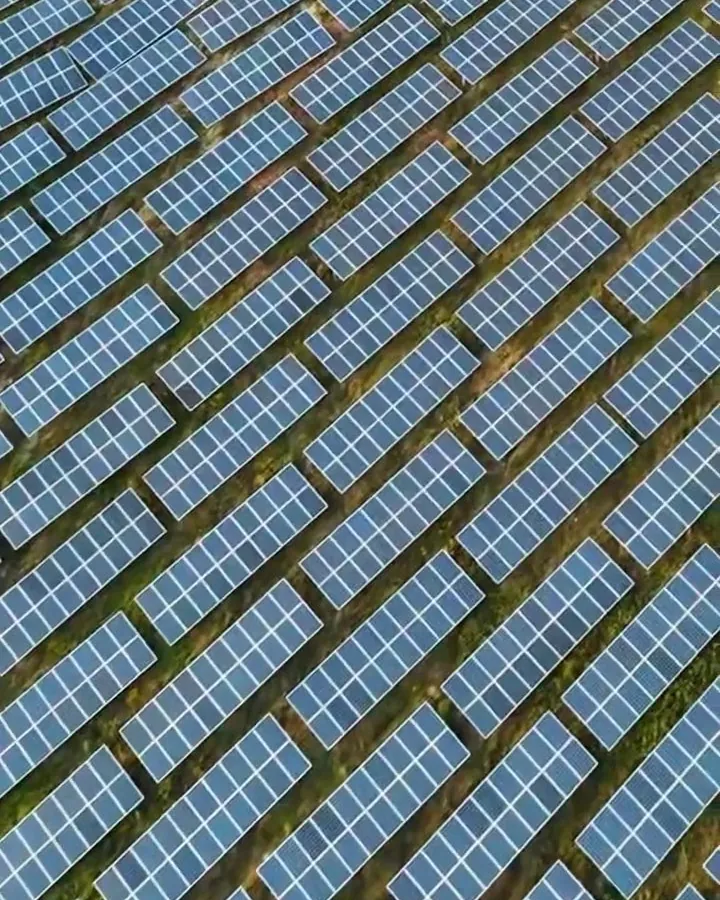
In a central inverter architecture, module strings are collected in DC combiner boxes and converted to AC in a small number of high-power inverters. In a string inverter architecture, the plant is built in a distributed way with many three-phase inverters, each with several MPPT inputs. Both approaches have their own logic; the choice depends on the size and layout of the site, the service organisation and the operator's priorities.
| Criterion | String (distributed) inverter | Central inverter |
|---|---|---|
| Impact of a fault | A single unit failure affects a small part of the plant | A single unit failure can stop a large part of the plant |
| MPPT resolution | Many MPPTs, adapting to strings under different conditions | Fewer MPPTs, suitable for homogeneous sites |
| Service and replacement | The unit can be removed and swapped for a new one | Requires specialist service, on-site repair and a spare-parts stock |
| Cabling | Shorter DC runs, more AC collection | Long DC runs and combiner boxes |
| Placement | Can be mounted on the structure or a wall | May require a separate inverter station or enclosure |
| Suitable sites | Commercial roofs, irregular land, multi-orientation layouts | Large, homogeneous ground-mounted plants |
On commercial roofs, string architecture often offers a more flexible solution because of roof surfaces facing different directions, chimneys and air conditioning units. The same applies to sloping or fragmented land. For the other steps of ground-mounted plant planning, see our article on ground-mounted solar plant installation.
MPPT count, voltage range and the Antalya climate
An MPPT (maximum power point tracker) is the circuit that continuously searches for the most efficient operating point of the connected module group. Strings connected to the same MPPT must share the same orientation, tilt and shading conditions; otherwise the weaker string drags the stronger one down. That is why, on a multi-orientation roof or on land with varying row spacing, the inverter's MPPT count and the number of strings that can be connected to each MPPT are among the key selection criteria.
Today's high-power modules, such as 605 W class TOPCon modules, have high current values. The maximum input current the selected inverter accepts per MPPT must be compatible with the module's short-circuit current. If they do not match, either the inverter limits the current and generation is lost, or the system operates outside the warranty conditions.
On the voltage side, temperature is decisive. The open-circuit voltage of modules rises in the cold. In inland districts with cold winters, such as Elmalı and Korkuteli, the string voltage at the lowest temperature must not exceed the inverter's maximum DC input voltage. In summer, the falling voltage of hot modules must not drop below the MPPT operating range. These two limits require the string length to be calculated specifically for each site.

DC/AC ratio and clipping: thinking with data on solar energy in Antalya
The DC/AC ratio is the ratio of the total DC power of the modules to the total AC power of the inverters. Theoretical example (assumption): when 120 kWp of module power is paired with 100 kW of AC inverter power, the ratio is 1.2. Because modules rarely operate at their nameplate power, designing the DC side somewhat larger than the AC side keeps the inverter in its efficient load range for longer during the day.
As the ratio rises, clipping appears: when DC power exceeds the inverter's AC limit, the excess energy cannot be generated. In Antalya irradiation is high at midday in summer, but high module temperature reduces DC power; on cool, clear spring days, DC power can reach higher peaks. According to PVGIS data, theoretical yield in central Antalya is 157 kWh/kWp in May and 168 kWh/kWp in July. Which ratio is right depends on module orientation, tilt, temperature profile, the connection capacity limit and the investor's priorities. The ratio should therefore be set with a site-specific hourly simulation. We discuss how the connection capacity limit affects the AC side in our article on connection capacity and transformers.
Efficiency, temperature and installation location
Inverter datasheets usually give two efficiency values: maximum efficiency and a weighted average efficiency across different load levels. At plant scale, the second value reflects real operation better. A topic discussed less than efficiency, however, is temperature derating. When the ambient temperature rises above a certain level, the inverter reduces its output power to protect itself. In an Antalya summer, an inverter mounted on a sun-exposed wall or in an unventilated room may derate precisely during the hours of highest generation.
Choosing the installation location is therefore part of choosing the inverter: shaded positions with airflow, a sun shield where needed, the mounting clearances between units recommended by the manufacturer, and a suitable ingress protection rating against dust and moisture. In coastal areas, the resistance of enclosures and fixings to salty air should also be checked.
Service, spare parts and warranty
The value of an inverter becomes clear on the day it fails. At plant scale, these questions should be asked before selection: does the manufacturer and the authorised dealer provide service support in the region? How quickly can a replacement unit be supplied for a faulty one? Can firmware updates and fault logs be accessed remotely? What are the warranty period and the warranty extension options?
The inverters supplied by Solar Nexo carry a 2-, 3- or 5-year factory warranty depending on the model, and the manufacturer warranty certificates are handed to the customer at delivery. On the service side, we provide maintenance and repair, including for systems installed by other companies; in this context we replaced five faulty inverters at an existing plant in Gazipaşa. Jobs like this demonstrate in concrete terms the serviceability of string architecture and the importance of proper replacement-unit planning.
Monitoring and grid compliance
The inverter is the plant's data source. String-level current and voltage monitoring, MPPT-level output comparison, alarm notifications and access to historical data make it possible to catch silent generation losses early. At plant scale, it matters that the monitoring system can store data when the internet connection drops and can bring multiple inverters together on a single screen. For details, see our article on remote monitoring of solar plants.
On the grid side, the inverter must meet the distribution company's connection requirements. Features such as reactive power control, power limitation, and grid voltage and frequency protection settings should be assessed as of November 2026 according to current legislation and the technical requirements of Akdeniz EDAŞ, the local distribution company. That the selected model supports these settings should be confirmed with the technical documentation at the quotation stage.
The inverters Solar Nexo uses in solar power plants in Antalya
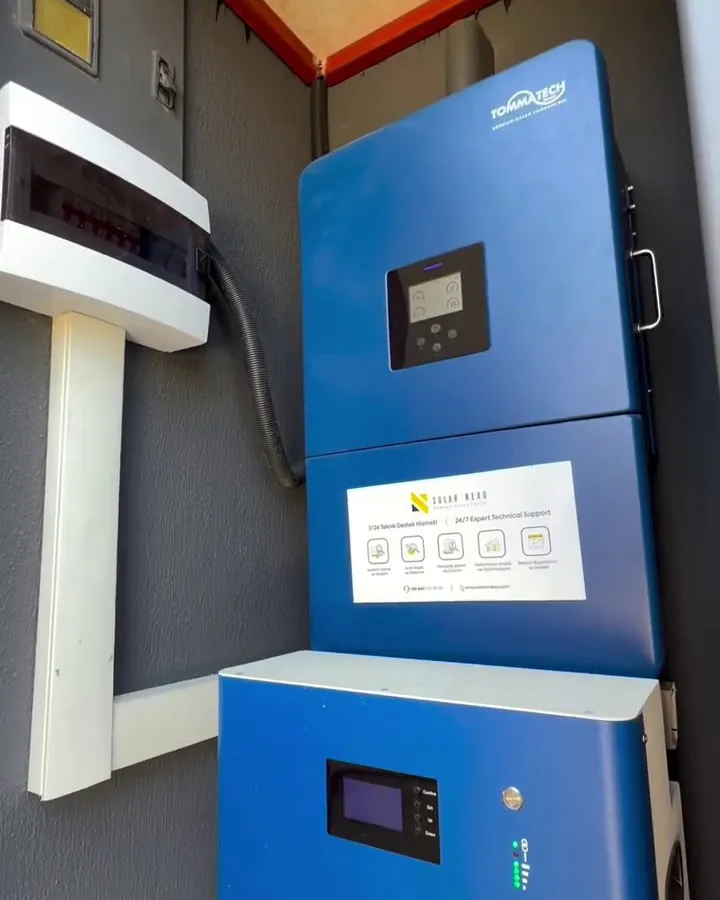
Solar Nexo is an authorised dealer of TommaTech and CW Enerji. In commercial rooftop and ground-mounted projects, TommaTech Trio series three-phase inverters are used, and in projects requiring storage, TommaTech high-voltage hybrid inverters; the product range also includes the Uno series for small single-phase applications and irrigation inverters for agricultural use. Which model and how many units are used is determined in the design according to the site layout, MPPT needs, DC/AC ratio and connection capacity. For additional points to consider in projects with storage, our article on choosing a hybrid inverter offers guidance. When making this choice, we recommend checking the Antalya solar plant inverter selection criteria in the following order:
- site layout and choice of architecture (string or central),
- MPPT count, current per MPPT and voltage range,
- DC/AC ratio and clipping analysis with a site-specific simulation,
- temperature derating behaviour and installation location,
- service, replacement unit and warranty conditions,
- monitoring infrastructure and grid compliance features.
Conclusion
Antalya solar plant inverter selection is not a decision to be made by looking at the highest efficiency figure on a datasheet. The choice of architecture determines the impact of a fault and the service method, the MPPT layout the yield of strings under different conditions, the string design safety on cold winter mornings, and the DC/AC ratio the balance between clipping and investment efficiency. In plants harnessing solar energy in Antalya, high irradiation and summer heat make the installation location and cooling part of the choice as well. During its free site survey, Solar Nexo examines your site and assesses these criteria specifically for your project; for the other steps of the project, take a look at our Antalya solar power plant guide.
Frequently asked questions
Should a commercial roof use string inverters or central inverters?
On commercial roofs, a string inverter architecture often offers a more flexible solution. Because of surfaces facing different directions, chimneys and air conditioning units, module groups operate under different conditions, and a large number of MPPTs makes these differences easier to manage. In addition, a single unit failure affects only a small part of the plant. The final decision should be made with a site-specific design.
Why does the MPPT count matter?
The MPPT count allows module groups with different orientation, tilt or shading conditions to be optimised separately. If strings under different conditions are connected to the same MPPT, the weaker string also lowers the yield of the stronger one. In addition, with modern high-current modules, the maximum input current per MPPT must be compatible with the module's short-circuit current.
What should the DC/AC ratio be?
There is no single ratio that is right for every project. The DC/AC ratio should be set with a site-specific hourly simulation, taking into account module orientation and tilt, the site's temperature profile, the connection capacity limit and the investor's priorities. As the ratio rises, clipping increases; if it is kept too low, inverter capacity may sit idle. Theoretical examples only illustrate the method.
Does clipping mean lost generation?
Partly, yes; clipping means excess energy cannot be generated at moments when DC power exceeds the inverter's AC limit. However, a reasonable level of clipping can be offset by the inverter operating in a more efficient load range throughout the day. What matters is that clipping is predicted with a site-specific simulation and consciously factored into the investment decision. A flat generation peak at midday in the monitoring data is a typical sign of clipping.
How does the Antalya heat affect the inverter?
At high ambient temperatures, the inverter may reduce its output power to protect itself. In Antalya summers, an inverter mounted on a sun-exposed wall or in an unventilated room can lose power during the hours of highest generation. A shaded location with airflow, the mounting clearances recommended by the manufacturer and a suitable ingress protection rating reduce this risk.
What is the inverter warranty?
The inverters supplied by Solar Nexo carry a 2-, 3- or 5-year factory warranty depending on the model. The manufacturer warranty certificates are handed to the customer at delivery. At plant scale, service access and replacement unit lead times matter as much as the warranty period, so regional service support and warranty extension options should also be asked about before selection.
Can you replace inverters at a plant installed by another company?
Yes, we can. Solar Nexo provides solar plant maintenance and repair services, including for systems installed by other companies. In this context we replaced five faulty inverters at an existing plant in Gazipaşa. During replacement, the new inverter's compatibility with the existing string layout, MPPT voltage range and grid settings is checked, and connections and protection devices are tested again.
Sources
Want a clear calculation for your roof?
The Solar Nexo team carries out a free site survey at your address in Antalya and designs the system that suits your roof, consumption and budget.